


For nearly eight years, British governments promised to ban LGBTQ+ conversion therapy.
None delivered.
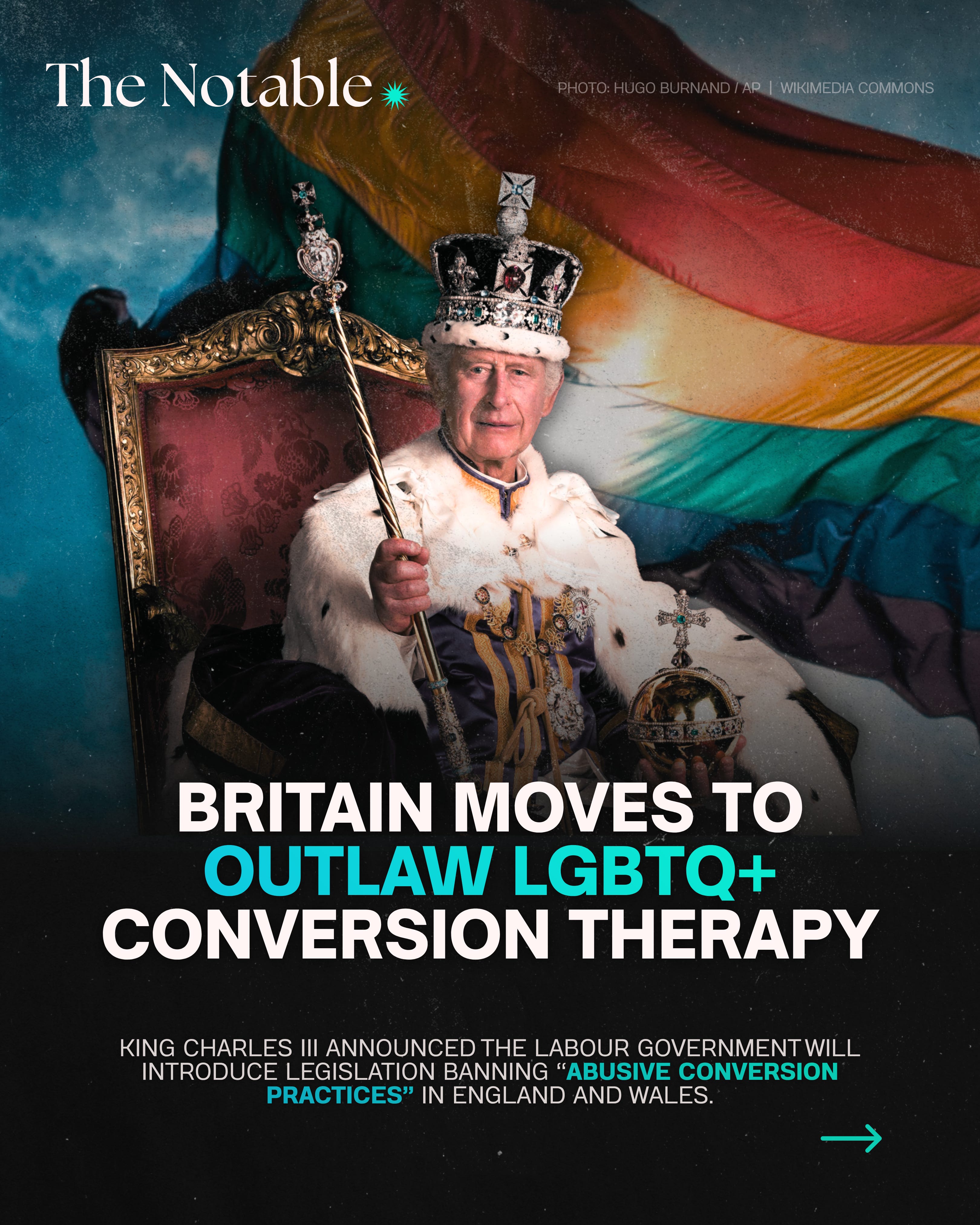
Now, the issue has returned to the center of British politics after King Charles III formally announced that Prime Minister Keir Starmer’s Labour government will introduce legislation banning what officials call “abusive conversion practices” targeting sexual orientation and gender identity.
The announcement came during the King’s Speech at the State Opening of Parliament on May 14, one of the most symbolic moments in British politics. Although delivered by the monarch, the speech outlines the elected government’s legislative agenda, making the proposal one of Labour’s flagship social policy priorities.
The move immediately reignited one of Britain’s most politically sensitive cultural debates, touching on LGBTQ+ rights, transgender identity, religion, free speech, parental authority, mental health care, and the role of the state in regulating personal intervention.
But beneath the political arguments lies a deeper story: Britain is trying to resolve a debate that has exposed how difficult modern democracies increasingly find it to balance identity rights, institutional authority, and cultural pluralism.
A promise Britain kept delaying
The UK first pledged to ban conversion therapy in 2018 under former Prime Minister Theresa May.
At the time, the commitment appeared politically straightforward. Conversion therapy had already become widely condemned by major medical organizations and LGBTQ+ advocacy groups, many of which argued the practices were psychologically damaging and rooted in attempts to suppress sexual orientation or gender identity.
But the issue quickly became far more complicated.
As lawmakers moved closer to drafting legislation, disputes emerged over whether the ban would include transgender people, whether religious exemptions should exist, and whether broad definitions could unintentionally criminalize exploratory counseling, parental discussions, or certain forms of therapy.
By 2022, the government under Boris Johnson faced a political backlash after plans reportedly excluded transgender people from the proposed protections. LGBTQ+ organizations accused the government of abandoning trans communities, while conservative critics warned the legislation risked overreach into healthcare, religion, and family life.
The result was paralysis.
Successive governments repeatedly promised action but failed to pass legislation.
Now Labour is attempting to break the deadlock.
According to government statements released alongside the King’s Speech, the planned legislation would ban attempts to change or suppress a person’s:
sexual orientation
gender identity
The proposal is expected to apply across England and Wales, though Scotland and Northern Ireland would require separate legal action because criminal law is partially devolved within the United Kingdom.
Officials have also emphasized that the legislation is intended to target “abusive conversion practices,” language that appears designed to reassure critics concerned about legal overreach.
The government says legitimate healthcare, lawful counseling, psychological support, and ordinary conversations between parents, therapists, or religious figures would remain protected.
But the exact legal definitions will likely determine whether the legislation becomes politically sustainable or descends into another prolonged cultural conflict.
Why this debate became so divisive
At the center of the controversy is a fundamental question modern liberal democracies increasingly struggle to answer:
Where does personal freedom end and harmful intervention begin?
Supporters of the ban argue conversion therapy is inherently coercive because it begins with the assumption that LGBTQ+ identities should be changed, suppressed, or corrected. Many medical associations and advocacy groups compare such practices to psychological abuse.
Critics, however, argue that poorly written laws could unintentionally criminalize therapists, parents, or religious leaders engaging in conversations around sexuality or gender identity, especially involving minors.
This is why governments repeatedly delayed legislation despite broad public support for banning coercive practices in principle.
The political challenge was never simply whether conversion therapy should be banned.
It was defining the boundary between coercion and conversation.
The timing of the announcement is also significant.
Across Europe and North America, governments and institutions are increasingly moving toward stronger legal protections around LGBTQ+ identity, particularly involving transgender rights.
Just days before the UK announcement, the European Commission backed continent-wide efforts encouraging member states to restrict conversion therapy practices.
Even outside the European Union after Brexit, Britain remains deeply connected to wider Western cultural and legal trends. The conversion therapy debate is increasingly part of a broader ideological shift reshaping debates over identity, rights, speech, healthcare, and institutional authority across democratic societies.
What was once considered a niche social issue has become part of a much larger political realignment.
For Labour, the announcement is politically important because it signals an attempt to deliver a long-promised reform that previous governments repeatedly failed to enact.
But announcing legislation and passing legislation are very different things.
The next stage will determine everything:
how the law defines “conversion practices”
what exemptions exist
how enforcement works
whether religious protections are included
how therapists and healthcare providers are affected
how transgender-related cases are treated legally
Those details will likely decide whether the bill becomes a landmark civil rights measure or another flashpoint in Britain’s increasingly polarized identity debates.
What began as a promise in 2018 has now become something larger.
A test of where Britain believes the limits of state authority, personal identity, and cultural freedom should now stand.