


Read full story here. (March 18, 2026)
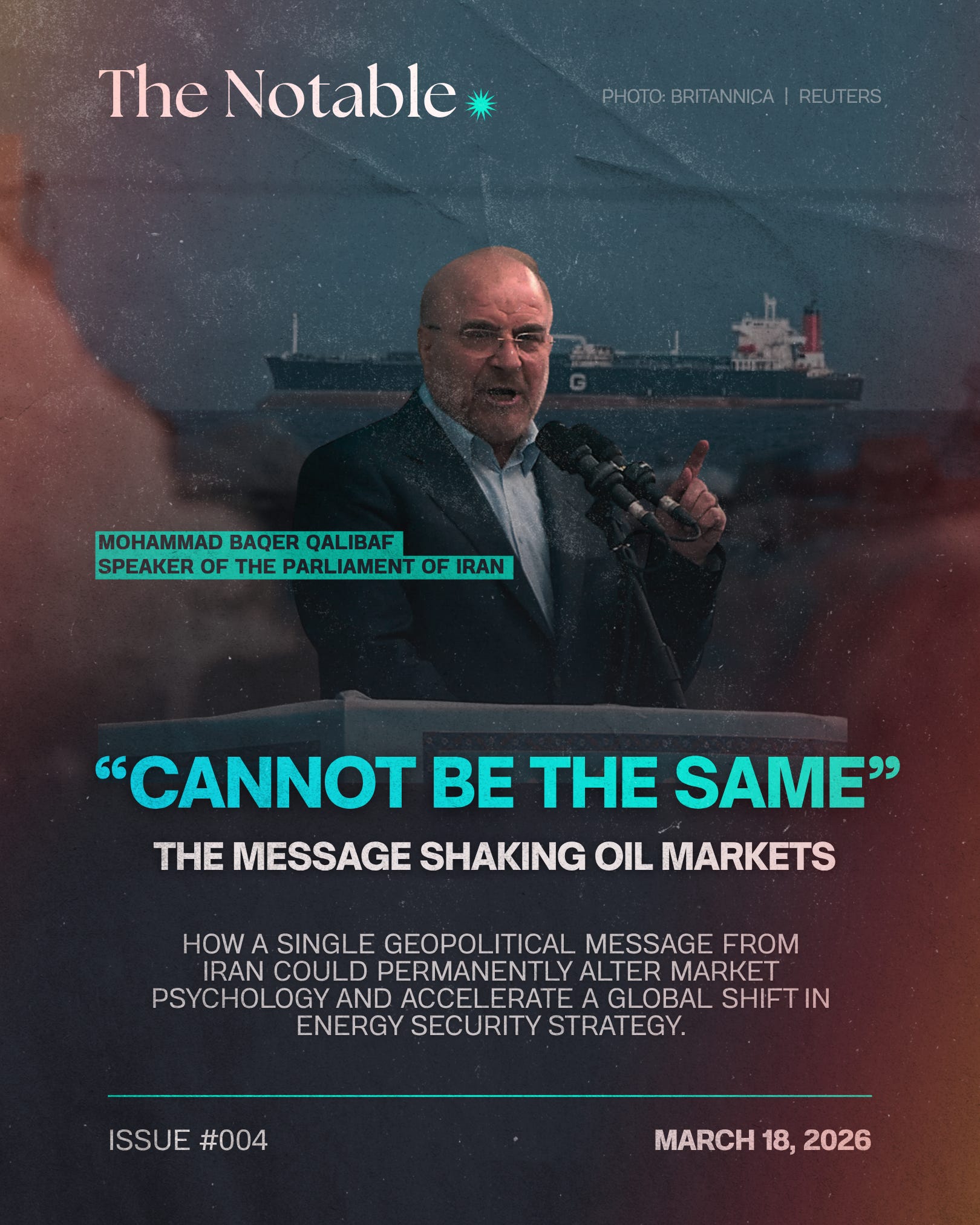
Iran’s recent warning that the Strait of Hormuz “cannot return to its previous conditions” has intensified global market anxiety already fueled by war-driven supply disruptions.
The narrow maritime corridor, responsible for transporting a significant share of the world’s oil, has long been viewed as strategically vulnerable yet operationally reliable. But Tehran’s message suggests that even after hostilities ease, the chokepoint may remain politically conditional, militarized, or economically unstable.
Markets responded quickly. Oil prices surged as investors began pricing in the possibility that uncertainty around energy flows could become structural rather than temporary. Shipping insurers and energy buyers now face the challenge of managing long-term geopolitical risk, not just short-term supply disruptions.
The implications go beyond price volatility. Governments are accelerating efforts to diversify energy routes, expand strategic reserves, and invest in alternative energy systems. The crisis may also reshape naval cooperation and global trade security strategies.
Ultimately, Iran’s remark highlights how modern geopolitics increasingly intersects with economic stability. It raises a critical question: in a world where key supply routes can be weaponized, how resilient are global markets and how prepared are nations for the next shock?