


Beijing Signals a Shift From Emergency Relief to Reconstruction
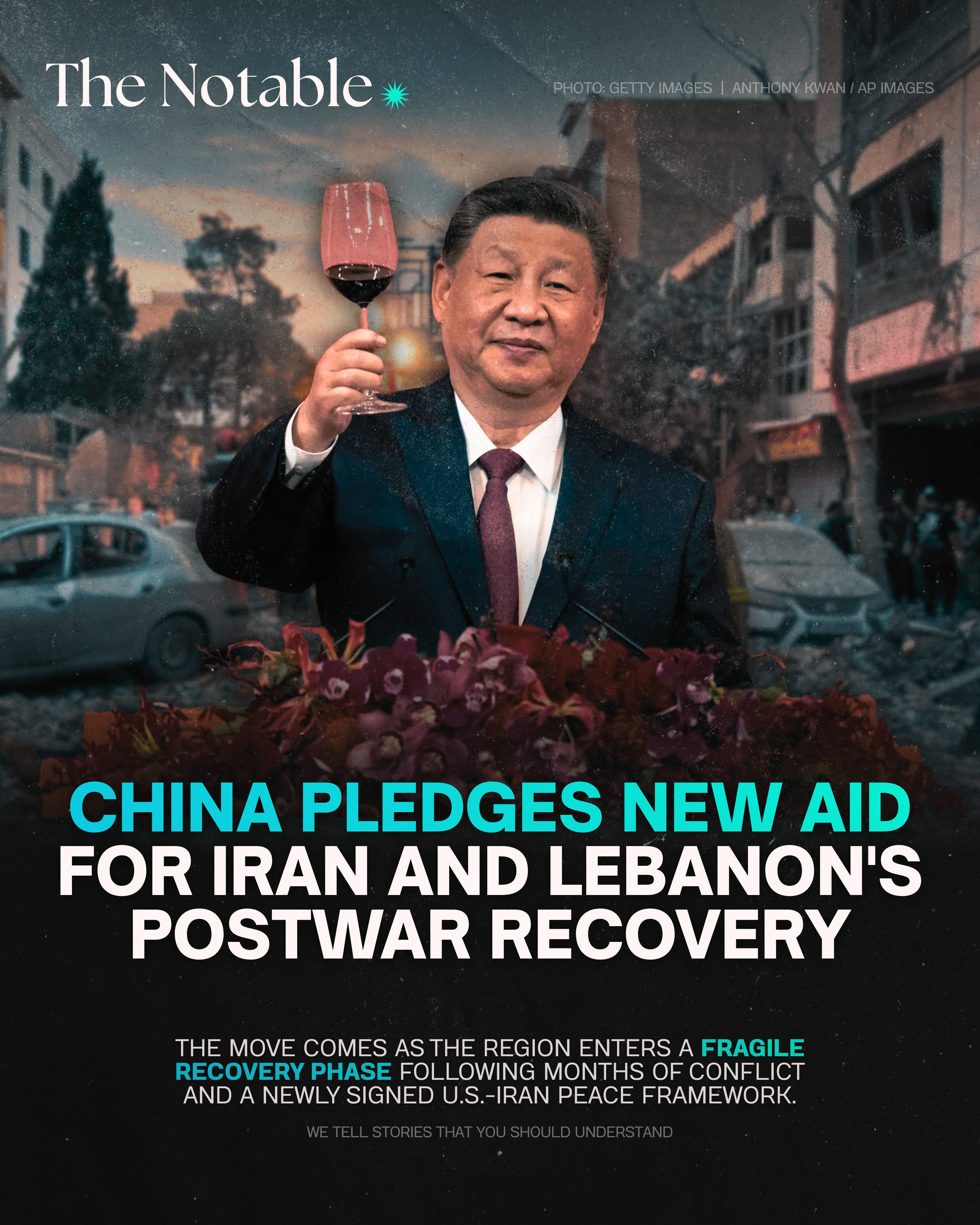
China has announced a new round of humanitarian and reconstruction assistance for Iran and Lebanon, positioning itself as an early participant in the region’s postwar recovery efforts as the Middle East begins transitioning from conflict toward rebuilding.
The announcement was made by Chinese Foreign Ministry spokesperson Lin Jian during a briefing in Beijing, where he expressed concern over the humanitarian and economic damage caused by months of conflict involving the United States, Israel, Iran, and Lebanon. According to Chinese officials, the new assistance package will support infrastructure repairs, economic recovery, and efforts to restore local livelihoods.
Beijing has not disclosed the size of the aid package or a timeline for its delivery.
The move comes at a pivotal moment for the region. A newly signed U.S.-Iran peace framework has shifted attention away from military operations and toward reconstruction, stabilization, and the long process of rebuilding damaged economies and communities.
A Region Emerging From Conflict
The latest aid announcement follows China’s earlier emergency assistance package announced in March, when Beijing sent humanitarian support to Iran, Lebanon, Jordan, and Iraq as fighting intensified across the region.
The difference now is that the focus is changing.
Emergency relief is designed to help populations survive a crisis. Reconstruction assistance is designed to help societies recover from one.
As active combat declines and diplomatic efforts gain momentum, governments across the region are increasingly focused on repairing infrastructure, restoring public services, reviving economic activity, and addressing the long-term consequences of war.
Iran faces significant economic challenges after months of sanctions, military confrontation, and disruptions to trade. Lebanon, already struggling with years of financial instability and political dysfunction, must now contend with additional damage caused by the conflict’s expansion into its territory.
China’s latest pledge is aimed at supporting that recovery process.
Why Lebanon Matters
The inclusion of Lebanon is particularly significant.
Recent diplomatic efforts have increasingly treated Lebanon as part of the broader conflict resolution process rather than as a separate theater. The emerging ceasefire framework between Washington and Tehran includes provisions intended to reduce military activity across multiple fronts, including Lebanon.
While tensions remain and military operations have not fully disappeared, international attention is beginning to shift toward preventing renewed escalation and creating conditions for long-term stability.
That makes reconstruction a strategic issue rather than simply a humanitarian one.
The ability of Lebanon and Iran to recover economically could influence whether the region moves toward stabilization or remains vulnerable to future crises.
China’s Growing Role
The aid announcement also highlights China’s expanding presence in the Middle East.
For years, Beijing has steadily increased its economic and diplomatic engagement across the region through trade, infrastructure projects, energy partnerships, and mediation efforts. Unlike the United States, China has generally avoided direct military involvement, preferring to build influence through investment and economic cooperation.
The latest assistance package fits that approach.
By supporting reconstruction efforts, China can strengthen relationships with governments across the region while presenting itself as a partner in recovery and development.
Chinese officials have repeatedly emphasized support for peace negotiations and post-conflict rebuilding, describing China as a constructive actor committed to regional stability.
Whether the financial value of the aid package proves large or small, the political signal is clear: Beijing intends to have a seat at the table as the Middle East enters its next phase.
The Bigger Picture
The war may be winding down, but a new competition is beginning.
As military operations give way to reconstruction, major powers are increasingly focused on shaping the postwar order. Economic assistance, infrastructure investment, diplomatic engagement, and development financing are likely to become key tools of influence in the years ahead.
China’s latest aid pledge reflects that reality.
The next chapter of the Middle East will not be defined solely by ceasefires and peace agreements. It will also be shaped by who helps rebuild what was destroyed, who finances recovery, and who gains influence as a result.
For Iran and Lebanon, reconstruction is now the immediate priority.
For China, it is also an opportunity.