


For years, Cuba’s economic crisis has been defined by shortages, blackouts, and decline. But this week, the country crossed into something more severe.
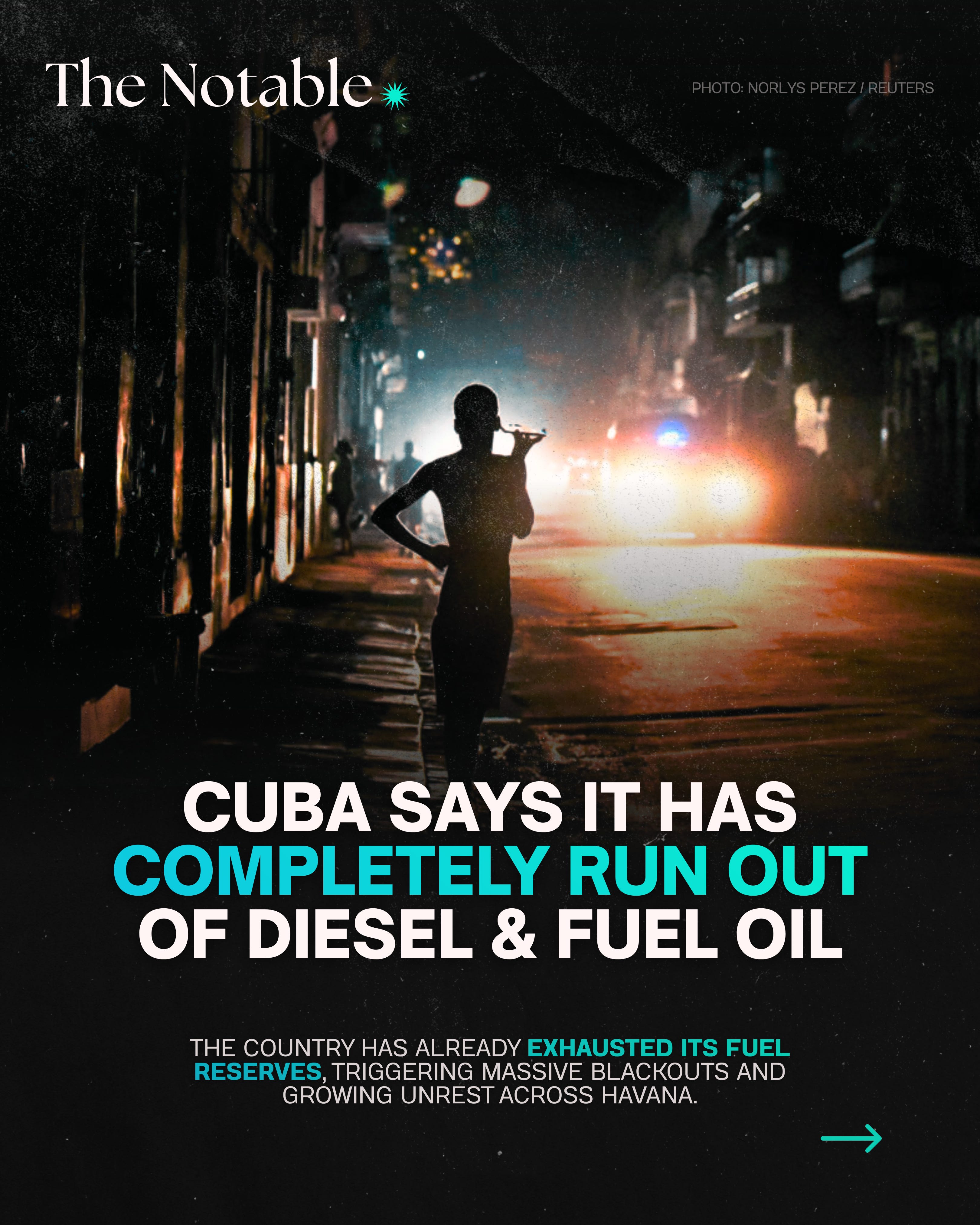
Cuban officials publicly confirmed that the island has effectively run out of diesel and fuel oil reserves, pushing the national electrical system into what authorities described as a “critical” state. Across Havana, blackouts lasting up to 20 to 22 hours a day are now disrupting transportation, refrigeration, hospitals, sanitation systems, and daily life.
The announcement marks one of the most serious moments in Cuba’s long-running energy crisis and raises growing questions about economic stability, state capacity, and political pressure inside the country.
“Absolutely no diesel”
Cuba’s Energy and Mines Minister, Vicente de la O Levy, said the country now has “absolutely no diesel” and “absolutely no fuel oil” left in reserve.
The statement came as the island’s electrical grid continues to deteriorate under the weight of fuel shortages and aging infrastructure. Large parts of Havana are now experiencing near-continuous outages, while transportation systems, businesses, and basic public services struggle to function.
In some areas, garbage collection has reportedly slowed dramatically due to fuel shortages, raising sanitation concerns in the capital. Food preservation and refrigeration have also become increasingly difficult as prolonged blackouts spread across the island.
What began as an energy shortage is now cascading into a broader logistical and humanitarian problem.
How Cuba reached this point
Cuba has long depended on imported fuel to keep its economy and electrical system operating. For years, Venezuela served as the island’s primary energy lifeline, supplying heavily subsidized oil shipments that helped sustain Cuba’s power grid and transportation networks.
But those shipments have sharply declined.
Recent reports indicate that fuel deliveries from both Venezuela and Mexico have fallen significantly in recent months, while emergency Russian shipments earlier this year provided only temporary relief. Cuban officials now say those reserves have been exhausted.
At the same time, the country’s infrastructure problems have continued to worsen. Cuba’s power plants are old, fragile, and heavily dependent on imported fuel. Domestic oil production exists, but it covers only a fraction of national demand and is often too low-quality to fully stabilize the system.
The result is a grid that has become increasingly vulnerable to even small supply disruptions.
Cuba blames intensified U.S. pressure
The Cuban government says the crisis has been worsened by intensified U.S. pressure targeting fuel shipments to the island.
According to multiple international reports, the Trump administration expanded restrictions earlier this year aimed at countries and companies supplying oil to Cuba. The measures reportedly discouraged tanker shipments and increased financial pressure on suppliers already hesitant to do business with Havana.
Cuba argues the restrictions have effectively created an energy blockade that has severely limited the country’s ability to secure fuel imports.
Washington’s broader strategy has focused on tightening economic pressure against the Cuban government while simultaneously increasing sanctions related to Venezuela and regional geopolitics.
The fuel crisis is now becoming another flashpoint in the decades-long confrontation between the United States and Cuba.
Blackouts, protests, and growing pressure
As conditions worsen, public frustration is becoming increasingly visible.
Reuters reported protests erupting in Havana this week as residents demanded the restoration of electricity and basic services. Demonstrators reportedly blocked roads and expressed anger over the scale of the outages.
While Cuba has experienced protests before, energy shortages carry unique political risks because they directly affect daily survival. Electricity is tied not only to comfort, but also to food preservation, transportation, communication, healthcare, and public order.
The longer the shortages continue, the harder it becomes for the government to maintain normal economic activity and social stability.
More than an energy crisis
Cuba’s fuel collapse is no longer just about electricity.
It is becoming a broader stress test for the country’s economic resilience and governing capacity at a time when the island is already facing inflation, migration pressures, infrastructure decay, and declining living standards.
The immediate question is whether Cuba can secure emergency fuel shipments before the electrical system deteriorates further.
But the larger question may be whether the country’s underlying economic model can continue functioning under sustained external pressure, declining energy access, and deepening structural weakness.
For now, Cuba is confronting a reality few governments openly admit:
An entire national system is beginning to run without fuel.