


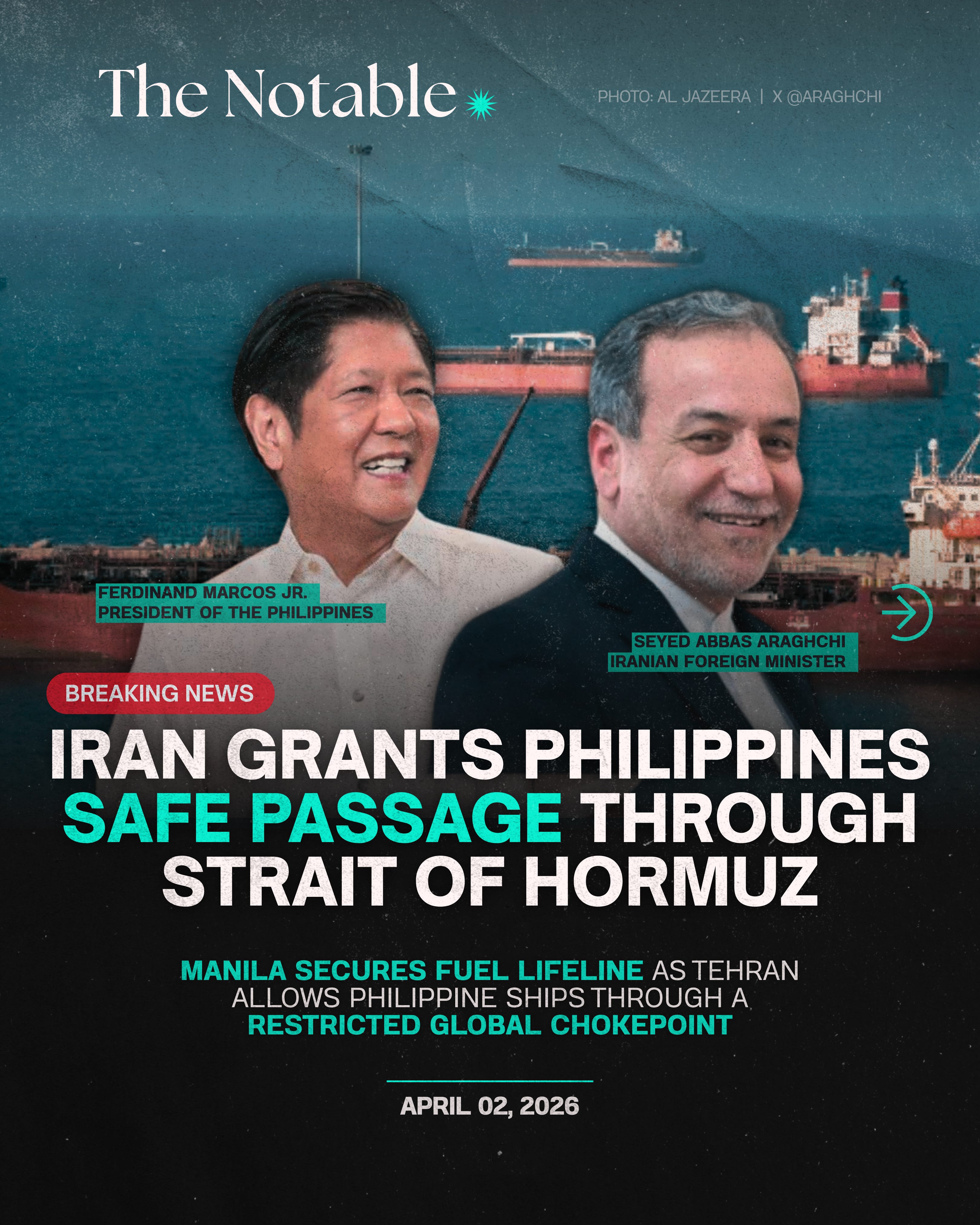
In a significant diplomatic breakthrough, Iran has assured the Philippines that it will allow the safe and uninterrupted passage of Philippine-flagged vessels through the Strait of Hormuz, one of the most strategically vital waterways in the world.
The commitment followed a direct call between Philippine Foreign Affairs Secretary Theresa Lazaro and Iranian Foreign Minister Seyed Abbas Araghchi on April 2. According to Manila, Tehran pledged that Philippine-bound energy shipments, vessels, and Filipino seafarers would be granted “safe, unhindered, and expeditious” passage through the strait despite ongoing regional tensions.
For the Philippines, the stakes could not be higher.
A Country Exposed to a Single Chokepoint
The Philippines imports nearly all of its oil, making it acutely vulnerable to disruptions in global supply routes. Much of that supply passes through the Strait of Hormuz, a narrow maritime corridor between Iran and Oman that carries roughly 20% of the world’s oil.
When tensions escalated in late February following military actions involving the United States, Israel, and Iran, traffic through the strait became unstable. Shipping slowed, insurance costs surged, and the risk of confrontation increased.
For Manila, this quickly evolved from a geopolitical crisis into an economic threat.
Under President Ferdinand Marcos Jr., the government moved to secure energy flows through diplomatic channels, recognizing that market solutions alone would not be enough.
The Strait Is No Longer Neutral
Iran’s assurance to the Philippines is not an isolated concession. It reflects a broader shift in how access to the Strait of Hormuz is being managed.
Rather than enforcing a total blockade, Tehran has moved toward a more selective system, allowing passage for certain countries while maintaining pressure on others. This approach enables Iran to retain leverage without completely shutting down global trade, effectively turning the strait into a controlled geopolitical gateway.
The implication is significant.
What was once considered a neutral artery of global commerce is increasingly shaped by political alignment and strategic negotiation. Access is no longer assumed. It is granted.
A Short-Term Fix in a Long-Term Shift
For now, the agreement provides immediate relief. It stabilizes a critical supply line, reduces uncertainty for Philippine-bound shipments, and offers some protection for the country’s large population of seafarers operating in the region.
But the underlying risks remain.
Shipping conditions in the Strait of Hormuz are still volatile. Broader conflict dynamics involving major powers are unresolved. And the precedent being set—where countries must negotiate access to essential trade routes—introduces a new layer of uncertainty into the global energy system.
The Bigger Picture
This development signals a deeper transformation.
Global energy flows are no longer governed solely by supply and demand. They are increasingly shaped by geopolitical permission, where access depends on diplomacy, alignment, and strategic positioning.
For countries like the Philippines, this means energy security is no longer just about sourcing fuel. It is about navigating power.
And for the rest of the world, it raises a more fundamental question:
If one of the most critical oil corridors can be selectively controlled, what does that mean for the future of global trade?