


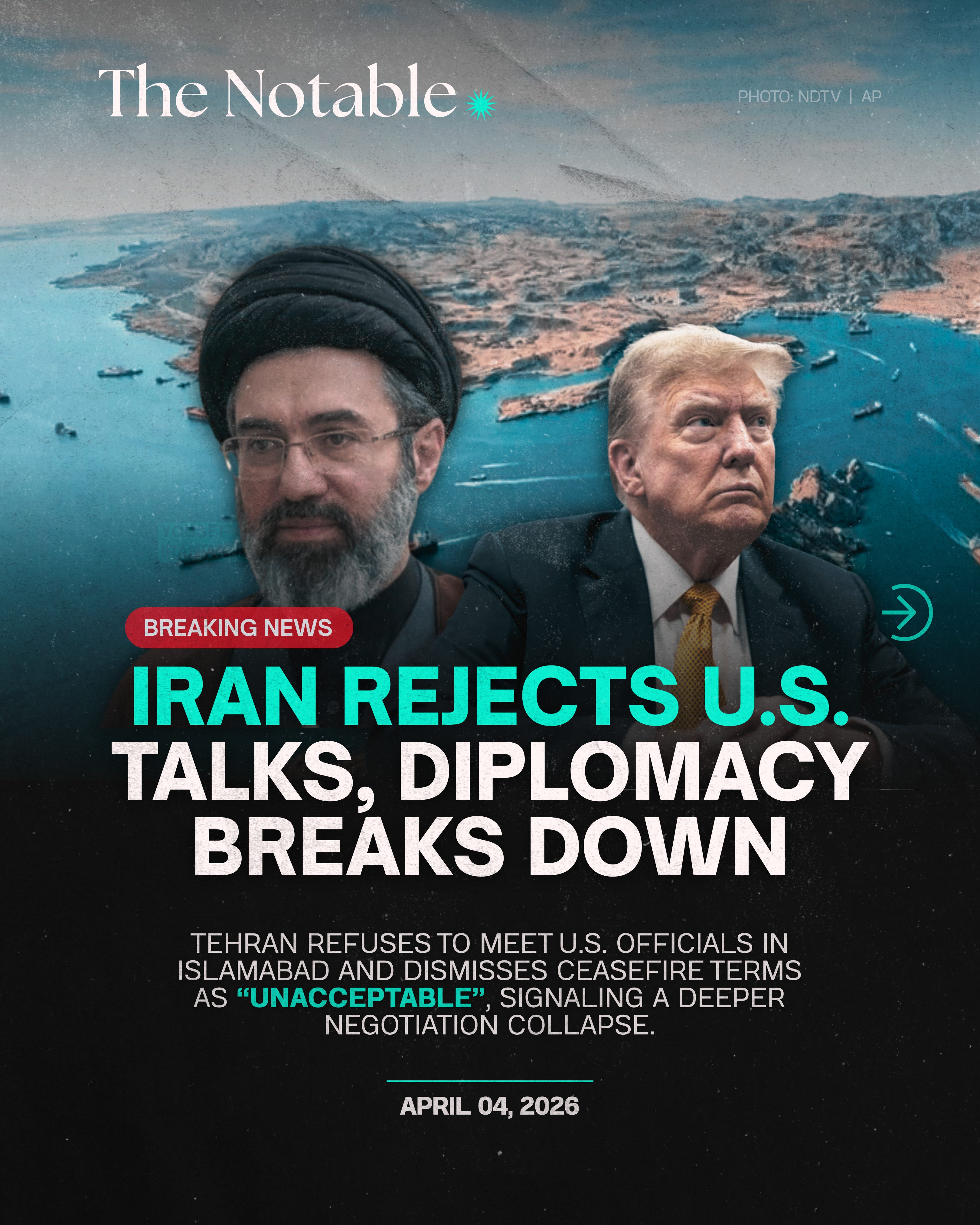
The latest attempt to open a diplomatic channel between the United States and Iran has failed.
Tehran has refused to meet U.S. officials in Islamabad, rejecting a proposal facilitated through Pakistani mediation. At the same time, Iran also turned down a 48-hour ceasefire offer, dismissing Washington’s broader demands as “unacceptable” and one-sided. Together, these moves mark more than a stalled negotiation. They point to a widening divide over how, and on whose terms, any de-escalation might occur.
A Negotiation That Never Began
The proposed meeting in Islamabad was intended to serve as a first step toward easing tensions. It followed behind-the-scenes efforts by regional intermediaries to bring both sides into at least indirect contact.
But Iran declined outright.
Officials signaled that engaging under current conditions would legitimize a framework they fundamentally reject. From Tehran’s perspective, the U.S. approach relies too heavily on temporary pauses and pressure, rather than addressing the structural issues driving the conflict.
The rejection effectively shuts down the most immediate diplomatic opening available.
The Ceasefire Dispute
At the center of the disagreement is a proposed short-term ceasefire, reportedly structured as a 48-hour pause in hostilities.
For Washington, this was a tactical step. A limited ceasefire could create space for broader negotiations, reduce immediate risks, and prevent further escalation.
Iran, however, views such proposals differently.
Tehran has consistently resisted temporary or conditional pauses, arguing they do little to change the underlying balance of power. Instead, Iranian officials are pushing for longer-term guarantees, including an end to military pressure and assurances against future attacks.
This difference is not procedural. It reflects a deeper strategic divide.
Two Incompatible Frameworks
What is emerging is a clash between two negotiation logics.
The United States is pursuing a sequenced approach:
Immediate de-escalation
Followed by broader talks
Leading to potential long-term arrangements
Iran is demanding a front-loaded approach:
Structural concessions first
Security guarantees upfront
Then any discussion of de-escalation
Neither side appears willing to move closer to the other’s position.
As a result, even preliminary steps, such as a short ceasefire or exploratory meeting, are failing to materialize.
Why This Moment Matters
The refusal to attend talks in Islamabad is more consequential than the rejection of a single ceasefire proposal.
It signals that the negotiation channel itself is collapsing.
Without even indirect engagement, there is no mechanism to:
Test compromises
Clarify demands
Or manage escalation in real time
This increases the likelihood of miscalculation, where actions on the ground outpace diplomatic control.
At the same time, the absence of talks suggests both sides may be preparing for a longer strategic standoff, rather than a near-term resolution.
The Broader Stakes
This breakdown comes at a moment when regional tensions are already elevated.
Any sustained escalation between the U.S. and Iran has implications beyond the immediate conflict zone. It affects:
Energy markets, particularly through routes like the Strait of Hormuz
Regional security dynamics, involving neighboring states and proxy actors
Global geopolitical alignment, as other powers respond or position themselves
In this context, diplomacy is not just about ending a specific confrontation. It is about containing a wider destabilizing effect.
What to Watch Next
The immediate question is whether another intermediary can revive contact.
Countries such as Pakistan, Turkey, or others in the region may continue to explore backchannel efforts. But success will depend on whether either side shows flexibility in its core demands.
If not, the trajectory is clear.
The conflict will shift further away from negotiation and toward managed escalation, where both sides act without a shared framework for de-escalation.
The Bottom Line
This is no longer about a rejected meeting or a failed ceasefire.
It is about a breakdown in how the conflict is supposed to end.
Until that gap is addressed, diplomacy will remain stalled, and the risk of a deeper, more prolonged confrontation will continue to grow.