


For just a few weeks, it appeared that Washington and Tehran might be moving toward something that had seemed impossible only months earlier: a negotiated end to one of the Middle East’s most dangerous confrontations.
That prospect has now dimmed.
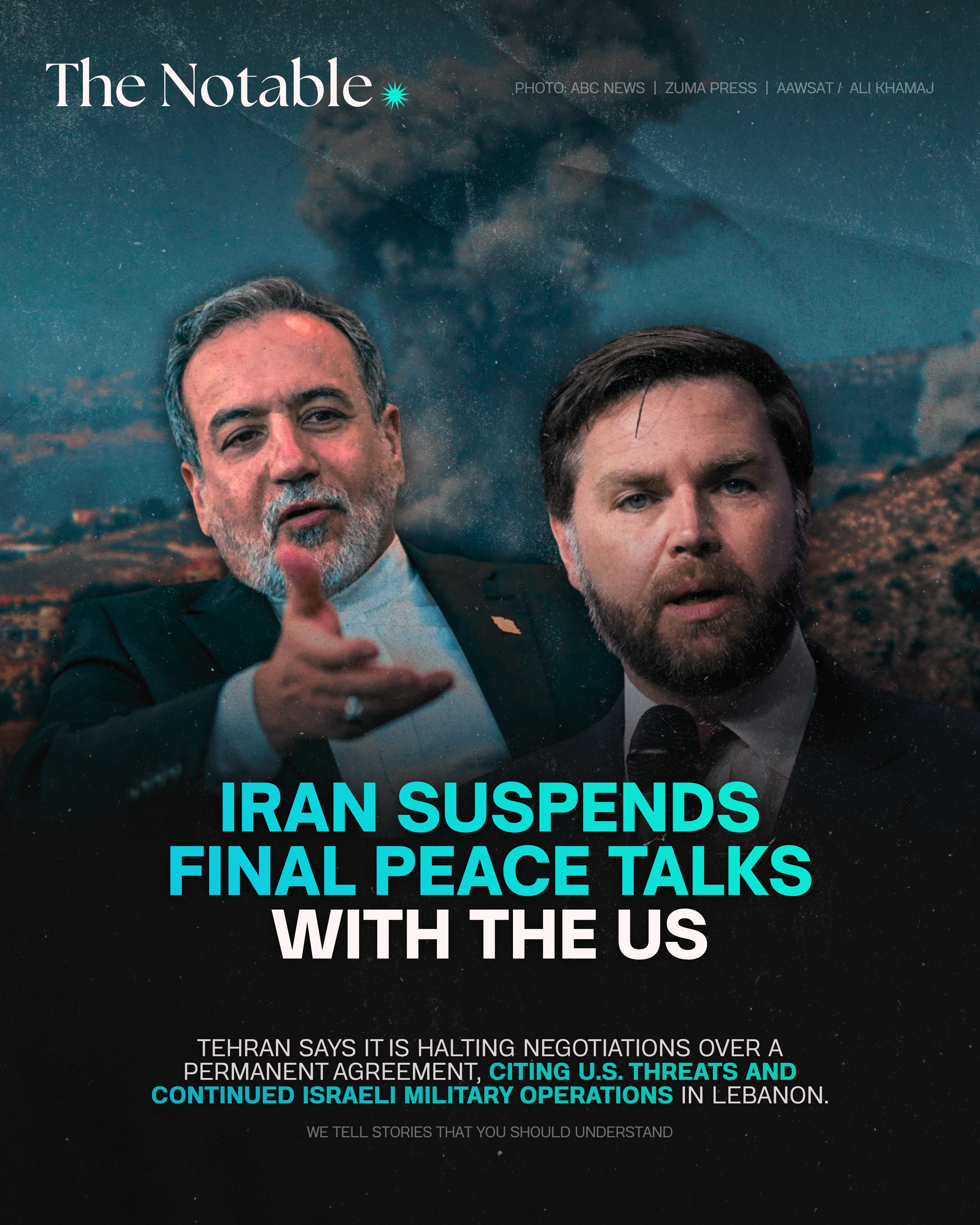
Iran has suspended negotiations on a final peace agreement with the United States, according to Iranian state-aligned media including Tasnim News Agency and reports carried by TASS. The decision effectively freezes the diplomatic process launched under the June Islamabad Memorandum of Understanding, a framework that was intended to transform an emergency ceasefire into a lasting political settlement.
Tehran says the talks can no longer continue because the conditions that made negotiations possible have been undermined. Iranian officials accuse Washington of failing to uphold commitments made under the memorandum, point to renewed U.S. military threats, and argue that continued Israeli military operations in Lebanon violate the broader ceasefire framework.
The announcement marks the most serious setback yet for a diplomatic effort that had offered a rare opening after months of escalating conflict.
A Deal That Was Meant to End the Crisis
The current negotiations did not begin from a position of trust.
They emerged after a period of intense military confrontation involving U.S. strikes on Iranian targets, Iranian retaliatory attacks, and growing fears that the conflict could spread across the region. To halt further escalation, negotiators produced the Islamabad Memorandum of Understanding, establishing a temporary ceasefire while creating a roadmap toward a comprehensive peace agreement.
Rather than serving as the final settlement itself, the memorandum was designed as a bridge. Over a 60-day period, negotiators were expected to resolve some of the most contentious issues dividing the two countries, including sanctions relief, regional security arrangements, maritime security in the Strait of Hormuz, and elements of Iran’s nuclear program.
Technical negotiations soon began through indirect channels with regional mediators facilitating communication between Washington and Tehran.
From the beginning, however, the process remained politically fragile.
Why Iran Walked Away
Iranian officials argue that the diplomatic process began to unravel well before this week’s announcement.
Tehran had already warned that it would not proceed to final negotiations unless Washington first implemented several preliminary commitments outlined in the June memorandum. Those concerns were compounded by increasingly confrontational rhetoric from President Donald Trump and by continued Israeli military operations in Lebanon.
Iran maintains that the ceasefire framework was intended to reduce hostilities across the broader regional theater, not simply between Washington and Tehran. From Tehran’s perspective, Israeli operations in Lebanon represent a violation of the conditions that justified continued negotiations.
Washington has not publicly accepted that interpretation, highlighting one of the central disagreements surrounding the agreement.
The suspension therefore reflects more than a diplomatic disagreement. It underscores fundamentally different understandings of what the June framework required from each side.
Diplomacy Under Increasing Pressure
The latest suspension comes against a backdrop of renewed instability.
Since the memorandum was signed, military activity has continued across several fronts, while political rhetoric on both sides has become increasingly confrontational. President Trump has questioned the future of the interim arrangement, while Iranian officials have warned that any further military action would be met with a stronger response.
Although neither government has formally declared diplomacy over, the political environment surrounding the negotiations has deteriorated considerably.
The longer talks remain suspended, the more difficult they may become to revive.
Diplomatic negotiations rely not only on formal agreements but also on confidence that both sides are willing and able to implement them. Each new accusation of violations, each military incident, and each escalation in public rhetoric erodes that confidence.
Why This Matters
The suspension is significant not simply because another round of negotiations has stalled.
It matters because the diplomatic process represented one of the few remaining mechanisms capable of preventing the current crisis from escalating into a broader regional conflict.
A permanent agreement was expected to address issues extending far beyond the immediate ceasefire, including sanctions, maritime security, regional military activity, and long-standing disputes over Iran’s nuclear program. Without continued negotiations, those issues remain unresolved.
That uncertainty affects not only Iran and the United States but also Israel, Gulf Arab states, global energy markets, and international shipping routes that depend on stability in the Middle East.
For now, the June framework remains under severe strain.
Whether it ultimately collapses or can still be revived will depend on political decisions in Washington, Tehran, and across the wider region. The window for diplomacy has not necessarily closed, but it has become considerably narrower.
The suspension of talks is therefore more than another interruption in a long history of difficult negotiations. It is a reminder that even after ceasefires are signed, building a durable peace often proves far more difficult than ending the fighting itself.