


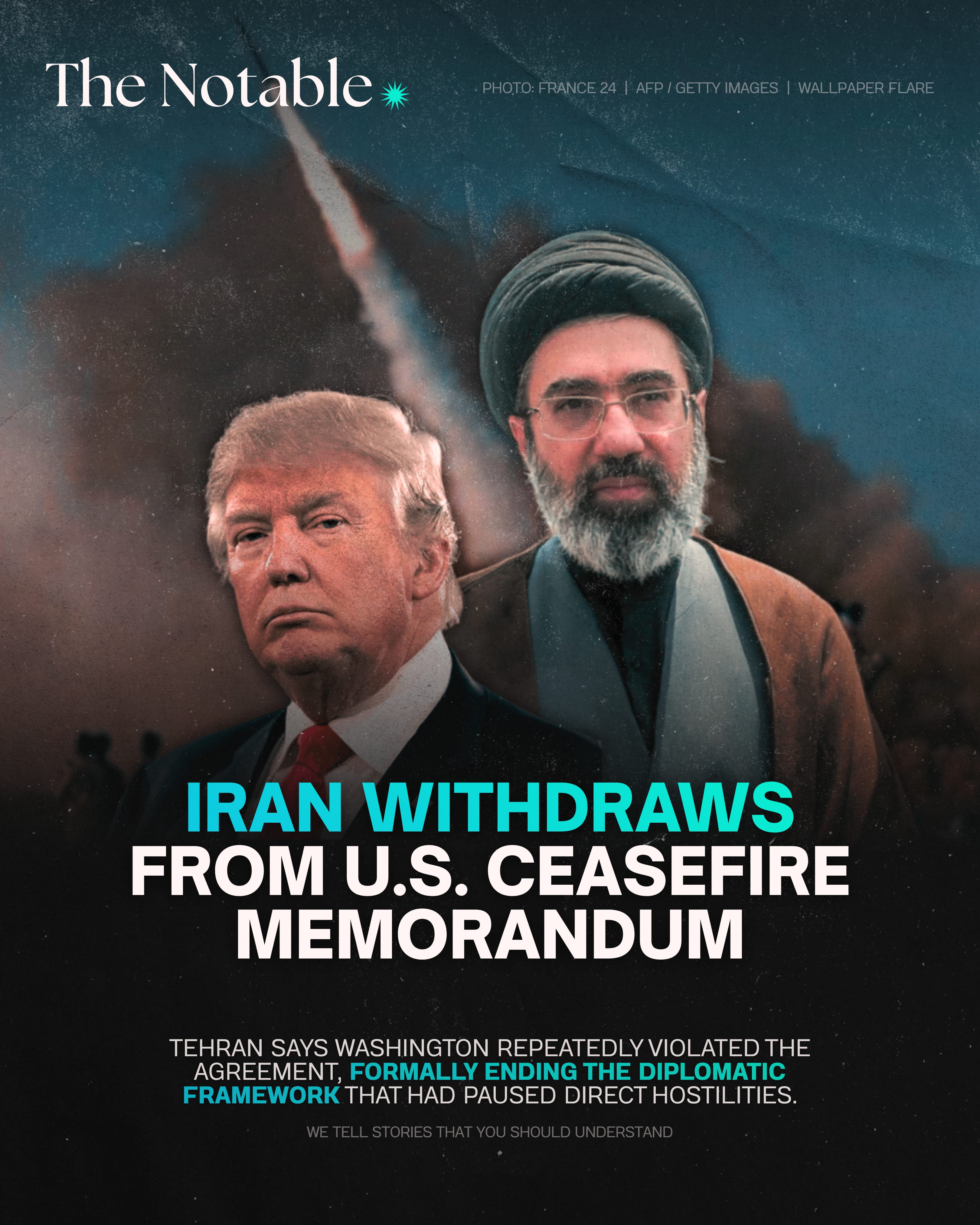
Iran has formally announced its withdrawal from the Islamabad Memorandum of Understanding (MoU) with the United States, bringing an end to the temporary diplomatic framework that had paused direct hostilities between the two countries after weeks of conflict.
The decision marks a significant setback for efforts to stabilize one of the world’s most volatile regions. Although the MoU was never intended to be a permanent peace agreement, it served as the primary mechanism for reducing immediate military tensions while providing a roadmap toward broader negotiations on sanctions, regional security, and maritime stability.
With Iran now declaring the agreement void, the already fragile diplomatic process has effectively collapsed.
What Was the Islamabad Memorandum?
The Islamabad Memorandum of Understanding was signed in June 2026 following an intense period of military confrontation between the United States and Iran.
Rather than resolving the underlying disputes between the two countries, the agreement functioned as an interim framework. It called for both sides to halt active military operations while opening negotiations on a range of unresolved issues, including sanctions, freedom of navigation, regional security, and the future of commercial shipping through the Strait of Hormuz.
The memorandum also envisioned negotiations toward a more comprehensive and lasting settlement. However, many of the most contentious issues were deliberately left for future talks, making the agreement dependent on continued political cooperation.
Why Did Iran Withdraw?
Iranian officials say the United States repeatedly failed to meet its obligations under the memorandum.
According to Tehran, Washington’s actions, including renewed military operations and other measures that Iran viewed as inconsistent with the agreement, amounted to material violations of the MoU. On that basis, Iranian authorities declared that the framework could no longer remain in force.
The United States has rejected Iran’s characterization of events and maintains that Tehran itself breached the agreement first through actions that undermined regional security and maritime stability.
As a result, each government now argues that the other bears responsibility for the collapse of the diplomatic framework.
Why the Agreement Was Important
Although described as a memorandum rather than a peace treaty, the agreement carried considerable strategic importance.
It established a formal channel through which both governments could manage tensions while avoiding direct military escalation. At a time when the risk of miscalculation was high, the MoU provided a degree of predictability by creating expectations for restraint and continued dialogue.
Its existence also reassured commercial shipping and international markets that both sides were at least attempting to contain the conflict while negotiations continued.
That diplomatic buffer has now disappeared.
The Strait of Hormuz Remains Central
The collapse of the agreement comes against the backdrop of renewed tensions surrounding the Strait of Hormuz.
Roughly one-fifth of the world’s seaborne oil passes through the narrow waterway, making it one of the most strategically important maritime chokepoints in the global economy. Any increase in military activity or disruption to commercial shipping can quickly affect energy markets, freight costs, insurance premiums, and broader investor confidence.
Even if major shipping lanes remain open, uncertainty alone can contribute to higher market volatility.
What Happens Next?
With the memorandum no longer in effect, there is currently no agreed diplomatic framework governing U.S.-Iran relations.
Future developments will largely depend on whether both governments seek to establish a new negotiating process or continue responding through military and economic pressure. International actors, including regional partners and global powers, may also attempt to encourage renewed diplomacy to prevent a wider escalation.
For now, the withdrawal does not automatically mean a broader war is inevitable. However, it significantly reduces the diplomatic safeguards that had helped manage tensions over the past several weeks.
The Bigger Picture
The withdrawal from the Islamabad Memorandum illustrates the difficulty of sustaining ceasefire agreements when the political disputes that caused the conflict remain unresolved.
Temporary agreements can reduce immediate violence, but they cannot by themselves eliminate long-standing disagreements over sanctions, regional influence, maritime security, and strategic deterrence. Without continued implementation and mutual confidence, even carefully negotiated frameworks can unravel quickly.
For policymakers, markets, and regional governments, the immediate question is no longer whether the MoU survives. It is whether a new diplomatic channel can emerge before renewed confrontation becomes the dominant reality once again.