


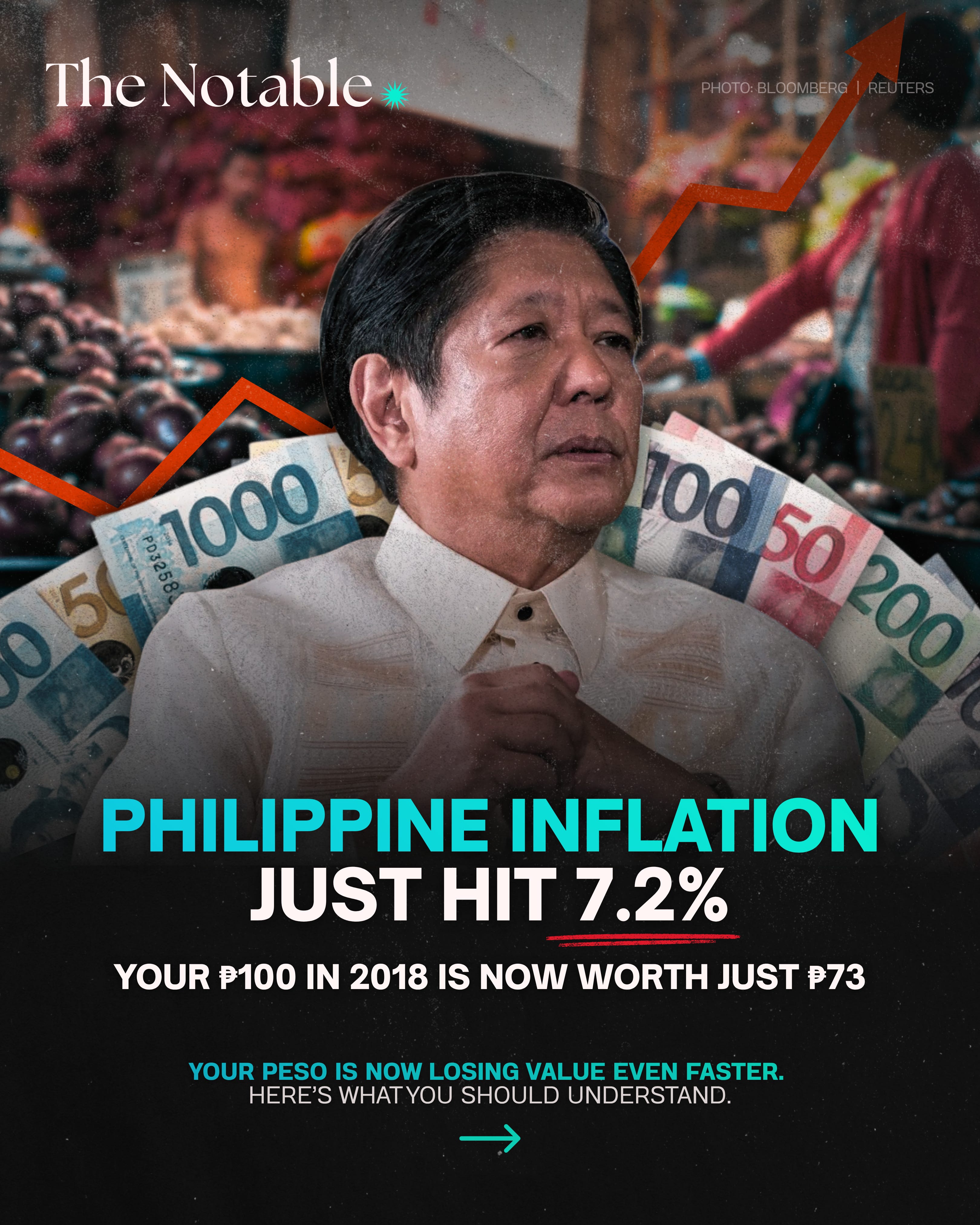
The Philippines’ inflation rate surged to 7.2% in April 2026, a sharp jump from 4.1% just a month earlier. It is the highest level in three years and well above both expectations and the central bank’s target range. Prices did not rise gradually. They accelerated. Food, fuel, and transport costs moved almost in tandem, creating a broad-based squeeze that households are already feeling.
The question now being asked, quietly but increasingly, is whether this is the beginning of something more destabilizing. Is the Philippines drifting toward a deeper inflation crisis, or even hyperinflation, as global pressures intensify?
The answer is more revealing.
A sudden shock, not a structural collapse
The recent surge is not emerging from within the Philippine economy. It is being transmitted into it.
At the center of the spike is energy. Rising global oil prices, driven by renewed tensions in the Middle East, have pushed fuel costs higher. For a country that imports the vast majority of its energy, this matters immediately. Fuel feeds into transport. Transport feeds into food distribution. Food, in turn, dominates household spending. The result is a fast-moving chain reaction across the cost structure of daily life.
This pattern is familiar. The Philippines has long been vulnerable to external price shocks. When global energy rises, domestic inflation follows. What is different this time is the speed. A jump from 4.1% to 7.2% in a single month signals not just pressure, but acceleration.
Still, this is not hyperinflation. That distinction is important.
What hyperinflation actually requires
Hyperinflation is not simply “high inflation.” It is a breakdown of the monetary system itself. Prices rise uncontrollably, often by double digits each month, as confidence in the currency collapses. This typically requires a combination of fiscal crisis, uncontrolled money creation, and institutional failure.
The Philippines does not meet these conditions.
The Bangko Sentral ng Pilipinas remains operationally independent and retains policy credibility. Inflation, while elevated, is still measured in single digits. There is no evidence of runaway monetary expansion or a collapse in fiscal discipline. The peso has weakened at times, but not in a disorderly manner.
What the country is experiencing is not systemic breakdown, but external stress.
Where the real risk lies
If hyperinflation is unlikely, sustained inflation is not.
The more relevant risk is persistence. If global energy prices remain elevated, or if supply disruptions continue, inflation may stay above target for longer than expected. This creates a more subtle but still significant problem: erosion rather than collapse.
The effects are already visible. Purchasing power has steadily declined. A peso today buys meaningfully less than it did just a few years ago. For lower-income households, where food and transport dominate spending, the impact is sharper. Inflation is not evenly distributed. It is felt most by those with the least buffer.
At the same time, policy options are narrowing. The central bank had been expected to ease as inflation cooled earlier in the year. That trajectory is now uncertain. Higher inflation reduces the room to cut interest rates, even as growth concerns remain. This creates a familiar tension: stabilizing prices versus supporting the economy.
The administration of Ferdinand Marcos Jr. is also under pressure to respond. Measures such as fuel subsidies or tax adjustments can soften the blow, but they do not remove the underlying cause. When inflation is imported, domestic tools are inherently limited.
A system exposed, not broken
The recent surge reveals less about policy failure and more about structural exposure.
The Philippines sits in a position common to many emerging economies. It is integrated into global markets but remains dependent on external inputs, particularly energy and certain food supplies. This creates a vulnerability: when global prices shift, domestic stability follows.
In that sense, inflation is not just a macroeconomic statistic. It is a reflection of how the country is positioned within a larger system.
What April’s 7.2% figure signals is not a loss of control, but a reminder of that positioning. The economy is absorbing a shock it did not create and cannot fully contain.
What comes next
The trajectory now depends less on Manila and more on the world beyond it.
If oil prices stabilize and supply pressures ease, inflation could moderate in the coming months. If not, the Philippines may enter a period of prolonged cost pressure, where prices remain elevated even without accelerating further.
For households, the distinction matters little in the short term. What they experience is immediate: higher grocery bills, more expensive transport, and tighter budgets. Inflation does not need to become extreme to become consequential.
The more realistic concern, then, is not hyperinflation. It is something quieter, but more enduring.
A gradual, persistent squeeze on purchasing power, driven by forces largely outside the country’s control.