


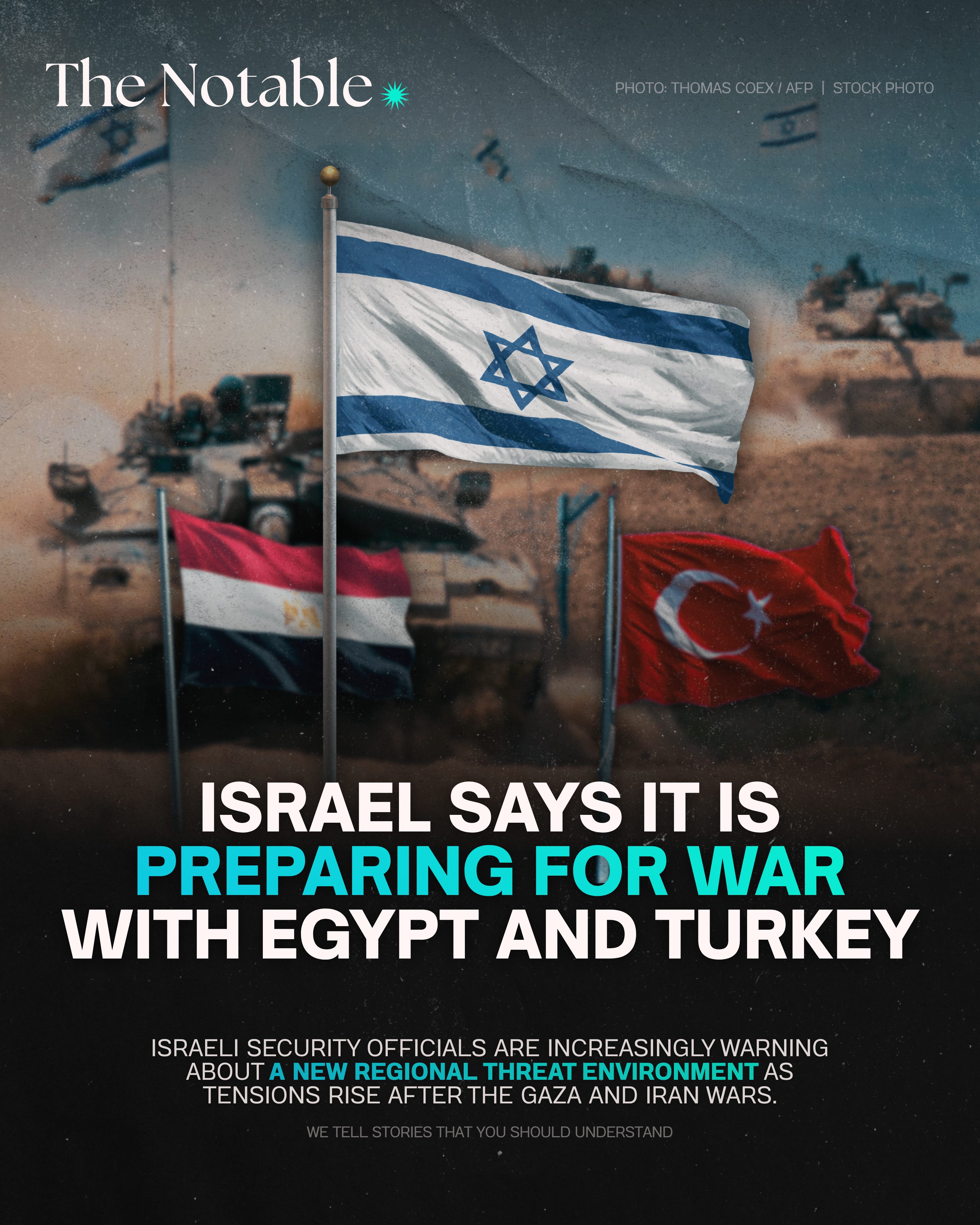
Israel is increasingly warning that the country may need to prepare for future conflict scenarios involving both Turkey and Egypt as regional tensions continue escalating after the Gaza war and the recent confrontation with Iran.
The warnings do not mean war is imminent. There is currently no evidence that either Egypt or Turkey are preparing to attack Israel.
But the rhetoric coming from Israeli security circles reveals something larger: the Middle East is entering a new strategic phase where old assumptions about alliances, deterrence, and regional stability are beginning to break down.
A New Regional Threat Environment
In recent months, Israeli officials, military analysts, and strategic committees have increasingly described Turkey as a long-term security challenge.
A major turning point came when Israel’s government-backed Nagel Committee warned that Israel should prepare for the possibility of future confrontation with Turkey. The warning reflected growing concern inside Israel over Ankara’s expanding regional ambitions and increasingly hostile stance toward the Israeli government.
Relations between the two countries deteriorated sharply after the Gaza war.
Turkish President Recep Tayyip Erdogan became one of Israel’s most vocal international critics, accusing Israel of committing atrocities in Gaza while deepening Turkey’s political support for the Palestinian cause. Ankara also suspended trade ties with Israel and intensified its regional diplomatic campaign against Israeli military operations.
For Israeli strategists, the concern is no longer limited to rhetoric.
Turkey possesses one of NATO’s largest militaries, expanding drone and defense industries, and growing influence across Syria, Libya, the Eastern Mediterranean, and parts of Africa. Some Israeli analysts now openly describe Turkey as Israel’s most important long-term strategic competitor after Iran.
Why Egypt Is Also Raising Concerns
Egypt presents a more complicated case.
Israel and Egypt officially remain at peace under the Camp David Accords, and security coordination between the two countries has historically been one of the foundations of regional stability.
However, Israeli security circles have recently begun expressing concern about Egypt’s military posture, particularly in Sinai.
Israeli analysts point to Egypt’s military modernization efforts, expanded deployments, and growing strategic coordination with Turkey as developments worth monitoring closely. The Gaza war has also placed enormous strain on relations between Cairo and Tel Aviv, particularly over border security, refugee concerns, and the future of Gaza itself.
Still, there is an important distinction between military concern and military intent.
There is currently no credible evidence suggesting Egypt is preparing for direct conflict with Israel. Much of the current discussion reflects Israeli threat perception rather than immediate military reality.
The Real Story Behind the Headlines
The deeper issue is not simply “Israel versus Egypt and Turkey.”
The real story is that the regional order that once defined the Middle East is beginning to fracture.
For years, Israel believed it was moving toward a more stable regional environment through normalization agreements, strategic partnerships, and shared opposition to Iran. The Abraham Accords and expanding Gulf ties appeared to reinforce that trajectory.
The Gaza war disrupted much of that momentum.
Across the region, public anger toward Israel surged, normalization efforts stalled, and governments were forced to recalibrate their positions. At the same time, the conflict with Iran further intensified regional polarization and accelerated military planning across multiple states.
Israeli officials increasingly believe the country is entering a more dangerous and unpredictable strategic environment where former partners, uneasy neighbors, and regional powers may all become future competitors.
In that sense, the warnings about Turkey and Egypt are less about immediate war and more about long-term regional transformation.
A Region Moving Back Toward Rivalry
The Middle East today looks very different from the one policymakers envisioned only a few years ago.
Instead of gradual normalization and economic integration, the region is once again being shaped by military calculations, power competition, and geopolitical distrust.
Turkey is pursuing greater regional influence. Egypt is asserting its strategic importance. Iran remains a central security concern. And Israel is increasingly preparing for a future where deterrence may no longer guarantee stability.
Whether this evolves into direct confrontation remains uncertain.
But what is already clear is that the post-Gaza Middle East is becoming more fragmented, more militarized, and significantly less predictable.