


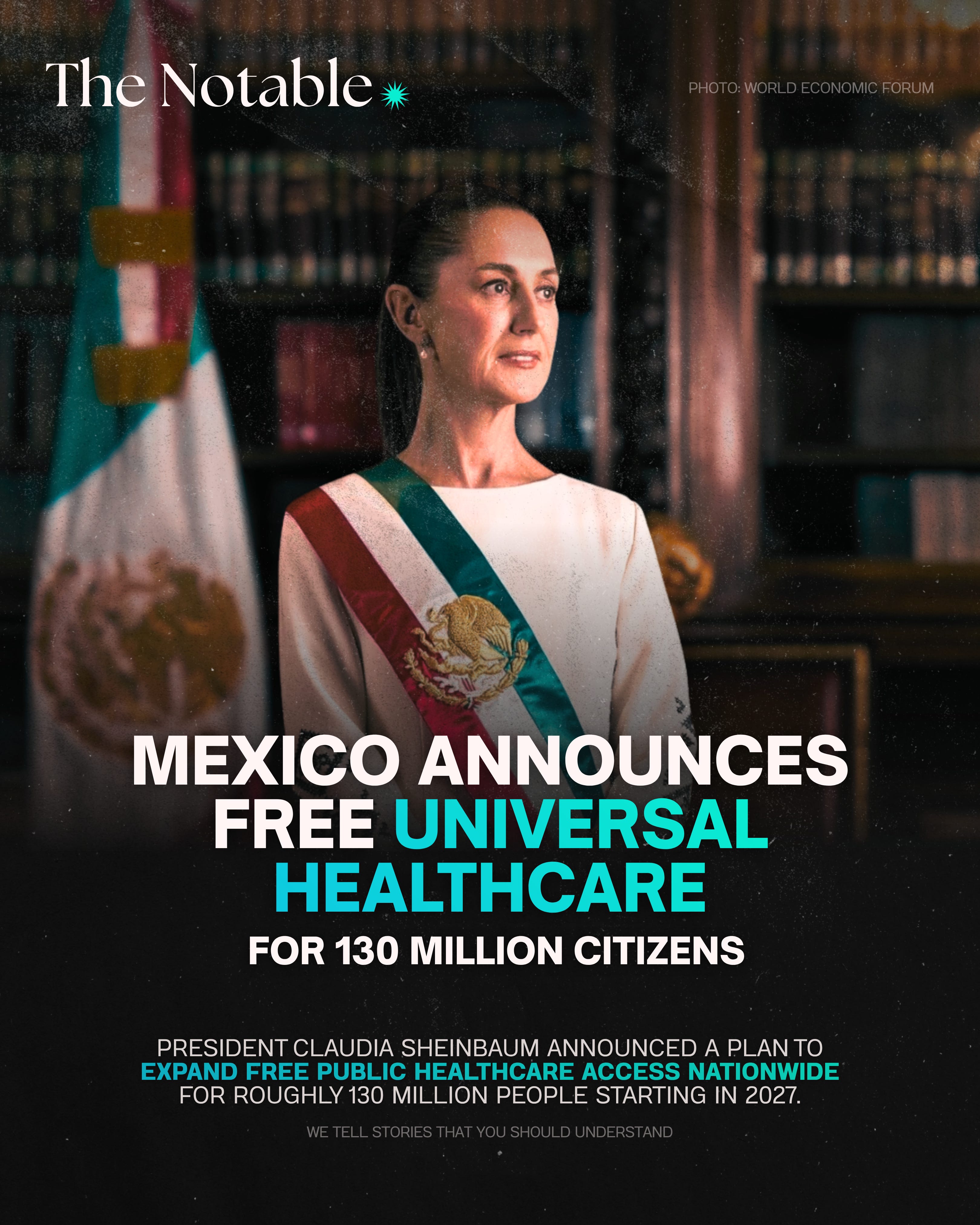
Mexico is preparing one of the most ambitious healthcare reforms in the modern world.
President Claudia Sheinbaum has announced a new universal healthcare initiative designed to expand free public medical access across the country beginning in 2027. The plan aims to eventually cover roughly 130 million people, making it one of the largest healthcare integration efforts in Latin America.
The reform will unify Mexico’s major public healthcare institutions, including IMSS, ISSSTE, and IMSS-Bienestar, into a more coordinated national system.
What Is Changing
For decades, Mexico’s healthcare system operated through separate networks tied to employment status and institutional affiliation.
Private-sector workers primarily relied on IMSS. Government employees used ISSSTE. Millions of uninsured or low-income citizens depended on other public systems. Access to hospitals, specialists, and treatments often depended on which institution a person belonged to.
The new reform is designed to remove those barriers.
Under the plan, Mexican citizens would eventually be able to receive treatment across public hospitals regardless of employment category or insurance affiliation.
How The Rollout Will Work
The Mexican government has already begun issuing universal health credentials and building digital systems designed to connect patient records and healthcare access nationwide.
Officials say the first operational phase in 2027 will prioritize:
emergency care
cancer treatment
high-risk pregnancies
vaccinations
critical illnesses
Broader nationwide integration is expected to happen gradually in later stages.
Why This Matters
The scale of the reform is significant.
Mexico is the world’s 10th most populous country and one of Latin America’s largest economies. If implemented successfully, the initiative could become one of the largest public healthcare integrations in the region’s modern history.
The reform also strengthens the welfare-state agenda launched under former president Andrés Manuel López Obrador and reinforces healthcare as a central political priority for Sheinbaum’s administration.
Supporters argue the system could dramatically improve healthcare access and reduce structural inequality across the country.
The Challenges Ahead
Despite the announcement, major obstacles remain.
Mexico still faces overcrowded hospitals, regional inequality, doctor shortages, medicine supply issues, and funding pressures. Previous healthcare centralization efforts, including the INSABI system introduced under López Obrador, struggled with operational and logistical problems.
That means the success of the reform will depend less on political messaging and more on whether Mexico can sustain and coordinate the system at national scale.
What Comes Next
The first major implementation phase is expected to begin in 2027, with broader expansion planned over the following years.
Mexico is now attempting something structurally ambitious: transforming healthcare from a fragmented institutional system into a universal national service for more than 130 million people.
Whether the country can fully deliver on that promise may become one of the defining political and social tests of Sheinbaum’s presidency.