


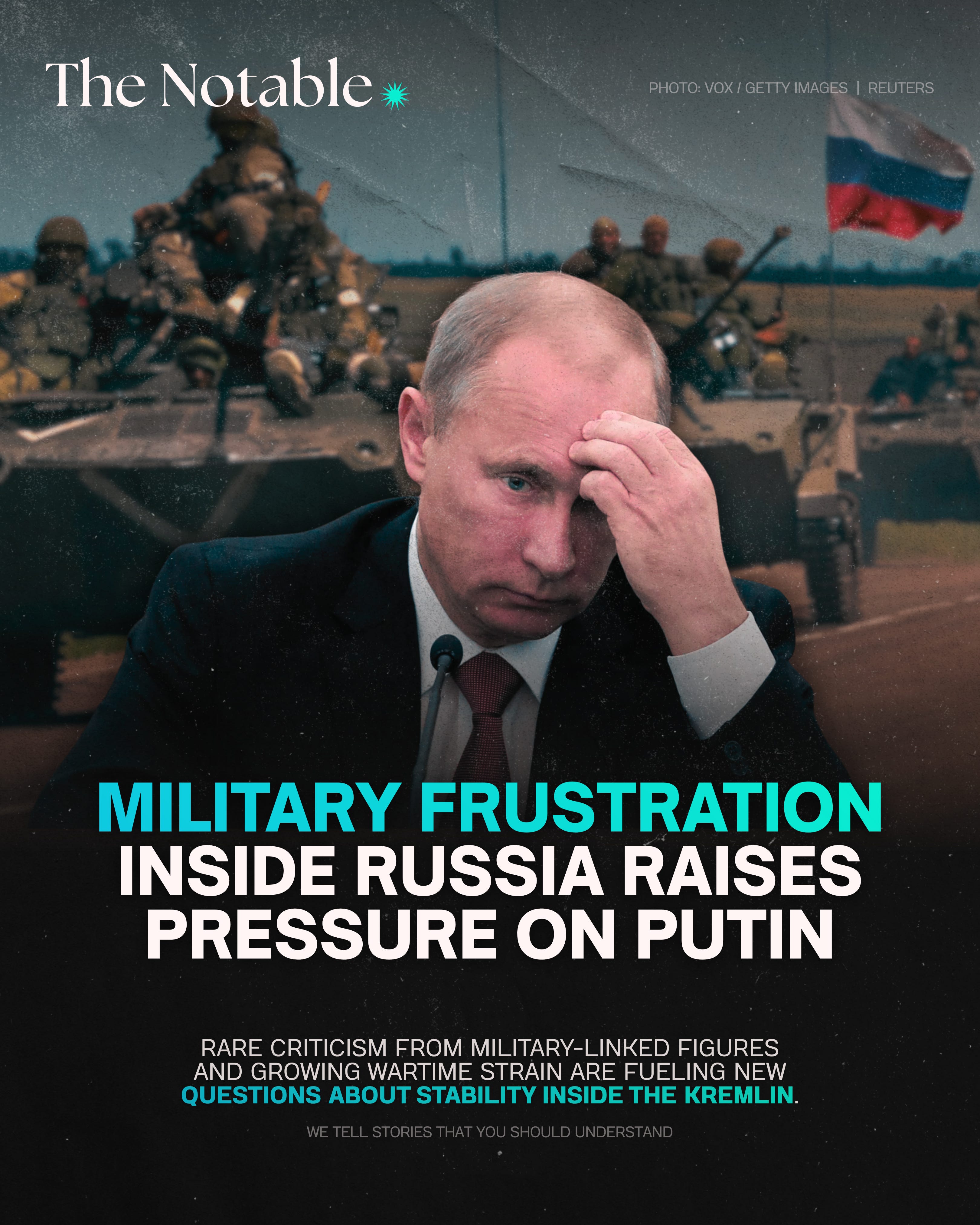
Rumors of growing frustration inside Russia’s military establishment are fueling new questions about the stability of Vladimir Putin’s system as the war in Ukraine enters another difficult phase.
Reports circulating through Russian opposition media and online networks claim some military-linked figures are increasingly dissatisfied with the Kremlin’s handling of the war, particularly as battlefield pressures intensify and domestic strain grows inside Russia. While there is currently no confirmed evidence of an organized coup attempt, the renewed speculation itself reflects how perceptions of stability around Putin have shifted since the invasion of Ukraine began.
The latest reports emerged after unusually direct criticism surfaced from military-linked voices over battlefield conditions and leadership failures. Open criticism from figures connected to Russia’s pro-war camp remains relatively rare in Putin’s political system, where dissent from military or security circles has historically been tightly controlled.
The War Is Increasing Pressure Inside Russia
The tensions come as Russia faces mounting pressure on multiple fronts.
Ukraine’s expanding drone campaign has increasingly targeted infrastructure deep inside Russian territory, including energy facilities, industrial sites, and logistical networks far from the front lines. The strikes have challenged the Kremlin’s narrative of domestic security while exposing vulnerabilities inside Russia’s wartime infrastructure.
At the same time, the war continues to place heavy pressure on the Russian economy. Military spending has surged, labor shortages remain severe, and concerns persist over the possibility of another mobilization wave if the conflict continues to drag on.
These pressures have contributed to growing frustration across parts of Russia’s military and nationalist camp, particularly among figures who believe the war effort has been mismanaged.
Why The Wagner Mutiny Still Matters
The current atmosphere has also revived memories of the Wagner mutiny in 2023, one of the most serious internal crises of Putin’s rule.
During that rebellion, Wagner forces led by Yevgeny Prigozhin briefly advanced toward Moscow after accusing Russia’s military leadership of incompetence and deception. Although the mutiny ultimately collapsed, the event shattered long-standing assumptions that Putin’s power structure was immune to internal armed challenges.
Since then, the Kremlin has moved aggressively to tighten control over Russia’s security and military institutions. A series of investigations, dismissals, and corruption probes involving military officials have fueled speculation about growing distrust and factional tension inside the state apparatus.
Putin Still Appears Firmly In Control
Despite the latest rumors, most analysts still believe Putin remains firmly in control. Russia’s political system remains highly centralized, and key elite groups continue to depend on the Kremlin for power, protection, and economic access.
There is currently no public evidence suggesting that senior military figures are preparing an organized move against Putin. Most of the claims remain speculative and unverified.
Still, the resurgence of military dissatisfaction rumors highlights a broader reality: the longer the war continues, the greater the pressure building inside the institutions sustaining Putin’s rule.
What Happens Next
What analysts are watching now is not necessarily the prospect of an immediate overthrow, but the possibility of gradual elite fragmentation as battlefield pressures, economic strain, and internal distrust continue to accumulate.
For years, Putin’s system projected stability through centralized control and elite cohesion. The war in Ukraine has not yet broken that system. But it has increasingly exposed the pressures building beneath it.