


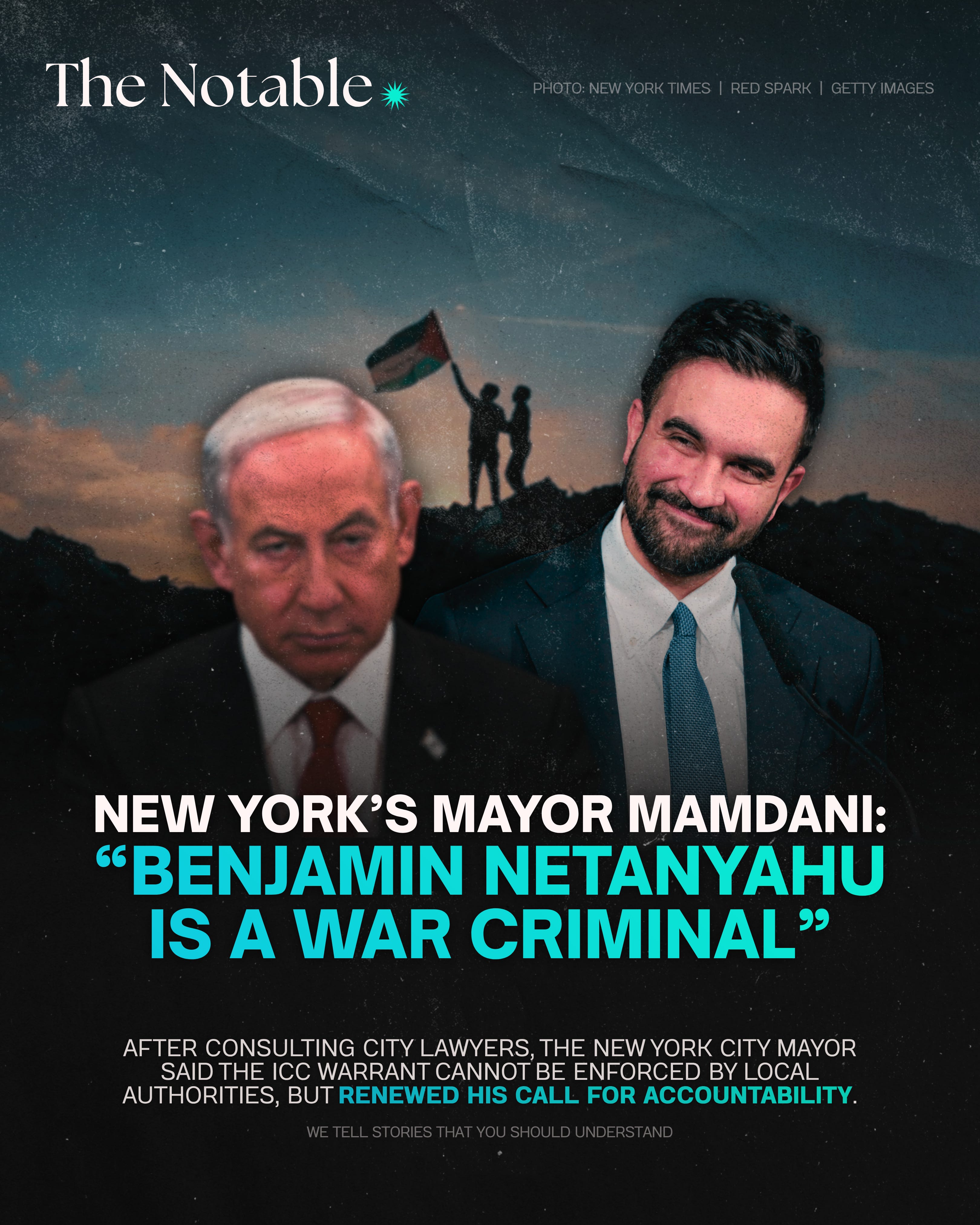
A new statement from New York City Mayor Zohran Mamdani has reignited debate over the International Criminal Court (ICC), the war in Gaza, and the challenges of enforcing international law in countries that are not members of the court.
In a video released on July 22, Mamdani described Israeli Prime Minister Benjamin Netanyahu as “a war criminal,” citing the ICC arrest warrant issued against him in November 2024. At the same time, the mayor acknowledged that New York City has no legal authority to execute that warrant, despite his personal support for international accountability.
video here
The statement comes as Netanyahu is expected to travel to New York later this year for the United Nations General Assembly, placing renewed attention on whether countries outside the ICC system have any obligation, or even the legal ability, to act on the court’s decisions.
What Mamdani Said
In his public remarks, Mamdani explained that he sought legal guidance from New York City’s Law Department regarding whether the city could arrest Netanyahu if he entered New York.
According to the mayor, the legal advice was clear: New York City does not possess the authority to enforce an arrest warrant issued by the International Criminal Court.
Despite that conclusion, Mamdani reaffirmed his political position.
He stated that Benjamin Netanyahu is “a war criminal,” argued that the ICC’s warrant should be taken seriously, and said Netanyahu is “not welcome” in New York City. He also maintained that responsibility for enforcing any international warrant would lie with the United States federal government rather than municipal authorities.
His statement therefore combined two distinct messages: moral support for international accountability and recognition of the legal limits placed on city governments in the United States.
Why the ICC Issued an Arrest Warrant
The controversy stems from a landmark decision by the International Criminal Court in November 2024.
The ICC issued arrest warrants for Israeli Prime Minister Benjamin Netanyahu and former Israeli Defense Minister Yoav Gallant, alleging reasonable grounds to believe they bear criminal responsibility for war crimes and crimes against humanity committed during the Gaza conflict.
Among the allegations cited by the court are the alleged use of starvation as a method of warfare against civilians, intentionally directing attacks against civilian populations, and other actions that prosecutors argue violated international humanitarian law.
The warrants represent allegations rather than findings of guilt. Under the ICC’s legal process, any accused individual is presumed innocent unless proven guilty in court.
Israel has categorically rejected the accusations. Israeli officials argue that the ICC lacks jurisdiction over the matter and have described the court’s decision as politically motivated. Netanyahu has repeatedly denied committing war crimes and has defended Israel’s military campaign as an act of self-defense following Hamas’ October 7, 2023 attack.
Why New York City Cannot Enforce the Warrant
A central point of Mamdani’s statement was not his criticism of Netanyahu but his acknowledgment that New York City lacks the legal authority to act on the ICC warrant.
This distinction is rooted in the structure of international law.
The International Criminal Court was established under the Rome Statute, a treaty that obligates member states to cooperate with the court, including executing arrest warrants when appropriate.
The United States, however, is not a party to the Rome Statute. Washington has long opposed granting the ICC jurisdiction over U.S. citizens and has also rejected the court’s authority over Israeli officials.
Because the United States has not incorporated ICC arrest obligations into domestic law, warrants issued by the court are not automatically enforceable by American law enforcement agencies. Municipal governments such as New York City possess no independent authority to carry out international criminal warrants.
As a result, Mamdani concluded that even if Netanyahu were to visit New York, the city itself could not legally arrest him.
A Longstanding U.S. Position on the ICC
The legal limitations highlighted by Mamdani reflect decades of American policy rather than a decision unique to the current administration.
Republican and Democratic administrations alike have maintained varying degrees of opposition to the ICC’s jurisdiction over U.S. nationals. While some administrations have cooperated with the court on specific investigations, successive governments have resisted recognizing its authority over American officials and key allies such as Israel.
This position has created a recurring tension between U.S. foreign policy and international criminal law, particularly when ICC investigations involve close American partners.
As a result, calls for the United States to enforce ICC warrants remain politically and legally contentious.
Why the Timing Matters
Mamdani’s remarks come ahead of the annual United Nations General Assembly, when heads of state from around the world gather in New York.
If Netanyahu attends, questions surrounding the ICC warrant are likely to receive renewed international attention, even if no legal action is expected from city authorities.
The issue extends beyond one individual or one conflict. It raises broader questions about the credibility of international justice when major powers decline to participate in the institutions responsible for enforcing it.
Supporters of the ICC argue that accountability should apply equally regardless of political influence or military power. Critics counter that the court has exceeded its legal mandate, risks politicizing international justice, and lacks universal legitimacy without participation from major countries such as the United States, Russia, China, and Israel.
International Justice Meets National Sovereignty
The episode illustrates one of the central dilemmas facing the modern international legal system.
The ICC can issue arrest warrants based on its interpretation of international law, but it has no police force of its own. It relies entirely on states to execute its decisions. When countries recognize the court’s jurisdiction, cooperation is generally expected. When they do not, enforcement becomes a political question rather than a legal certainty.
This gap between international legal authority and domestic legal power has become increasingly visible in conflicts involving major geopolitical actors.
Mamdani’s statement reflects that reality. While he expressed support for holding leaders accountable under international law, he also acknowledged that local governments operate within the constraints of domestic legal systems.
The Bottom Line
The latest development is not simply that Mayor Zohran Mamdani called Benjamin Netanyahu a “war criminal.” The more significant news is his acknowledgment that New York City has no legal authority to enforce the ICC arrest warrant, despite his belief that it should be respected.
The episode underscores the continuing tension between international criminal justice and national sovereignty. As world leaders prepare to gather in New York for the UN General Assembly, that tension is likely to remain at the center of global debate, highlighting the difficult balance between diplomatic realities, domestic law, and the pursuit of accountability under international law.