


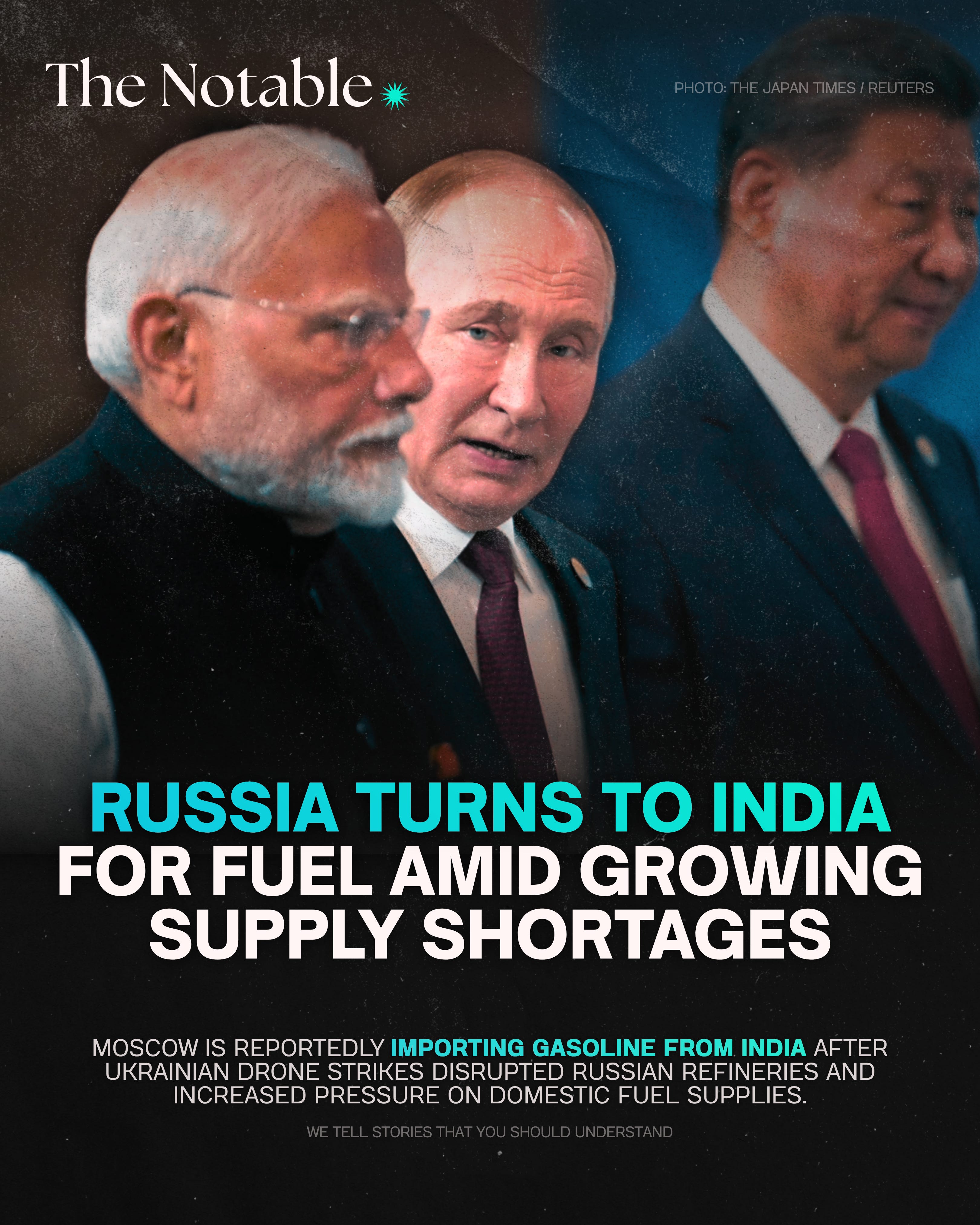
Russia is reportedly importing gasoline from India after months of Ukrainian drone strikes disrupted the country’s refining infrastructure and increased pressure on domestic fuel supplies.
According to Reuters, at least 60,000 metric tons of gasoline have already been shipped from India to Russia by tanker, with additional imports reportedly under discussion. The development marks a striking reversal for one of the world’s largest energy exporters, which has historically sold fuel abroad rather than purchased it from foreign suppliers.
The issue is not a shortage of crude oil itself. Russia remains one of the world’s largest oil producers. The problem is increasingly tied to refining capacity and fuel distribution after repeated attacks on critical energy infrastructure.
Ukraine’s Expanding Strategy
Over the past year, Ukraine has steadily expanded its long-range drone campaign against Russian oil infrastructure. Refineries, fuel depots, and storage facilities deep inside Russian territory have become regular targets as Kyiv attempts to increase the economic and logistical cost of the war.
Several Russian refining facilities have reportedly been forced into temporary shutdowns following repeated strikes. The disruptions have become more significant during Russia’s peak summer demand season, when fuel consumption typically rises because of agriculture, transportation, and domestic travel.
The strategy reflects a broader shift in modern warfare. Rather than focusing only on military positions near the front lines, Ukraine is increasingly targeting the systems that sustain Russia’s economy and logistics network.
Why The Situation Matters
The development is significant because Russia is not normally a fuel-importing country.
As one of the world’s largest oil and gas producers, Russia has long relied on energy exports as both an economic pillar and a geopolitical tool. The fact that Moscow is now reportedly purchasing gasoline from abroad suggests the pressure on its domestic refining system is becoming more difficult to manage.
Russian officials have already introduced emergency measures aimed at stabilizing fuel supplies. Reports indicate authorities are considering additional import arrangements, subsidies, tax adjustments, and possible restrictions on some fuel exports to protect the domestic market.
Rising fuel prices and regional supply strains have also reportedly emerged across parts of the country.
Still, analysts caution against overstating the situation. Russia’s total fuel consumption remains far larger than the current reported import volumes. The Indian shipments appear to function more as stabilization measures than evidence of a nationwide collapse.
The India Connection
The India angle is particularly important because it highlights how global energy markets have adapted to wartime sanctions.
Since Western sanctions intensified following the invasion of Ukraine, India has become one of the largest buyers of discounted Russian crude oil. Indian refiners dramatically increased purchases as Moscow redirected exports away from Europe toward Asian markets.
That has now created an unusual and highly symbolic cycle.
Russia sells crude oil to India at discounted prices. Indian refineries process some of that oil into gasoline and refined fuel products. Russia then reportedly purchases part of that refined fuel back from India to support its own domestic supply system.
The arrangement illustrates how sanctions, trade flows, and global commodity markets are reshaping themselves around the realities of the war rather than simply isolating Russia from the global economy.
Infrastructure Is Becoming The Battlefield
The broader significance of the story extends beyond fuel markets.
Ukraine’s attacks increasingly demonstrate how modern conflicts are fought not only through territorial battles, but through pressure on infrastructure, logistics, energy systems, and economic resilience.
For Russia, the risk is not merely higher gasoline prices. Prolonged disruptions to refining capacity could eventually affect transportation networks, industrial activity, agriculture, and military logistics inside the country itself.
Moscow is reportedly accelerating refinery repairs while also exploring additional fuel imports from Belarus and other partners. But if Ukrainian strikes continue targeting critical energy infrastructure, the pressure on Russia’s domestic supply system could deepen further in the months ahead.
For now, one of the world’s largest energy exporters is turning abroad to stabilize fuel supplies at home, an outcome few would have predicted at the start of the war.