


The relationship between the United States and Venezuela’s oil industry has undergone a dramatic transformation.
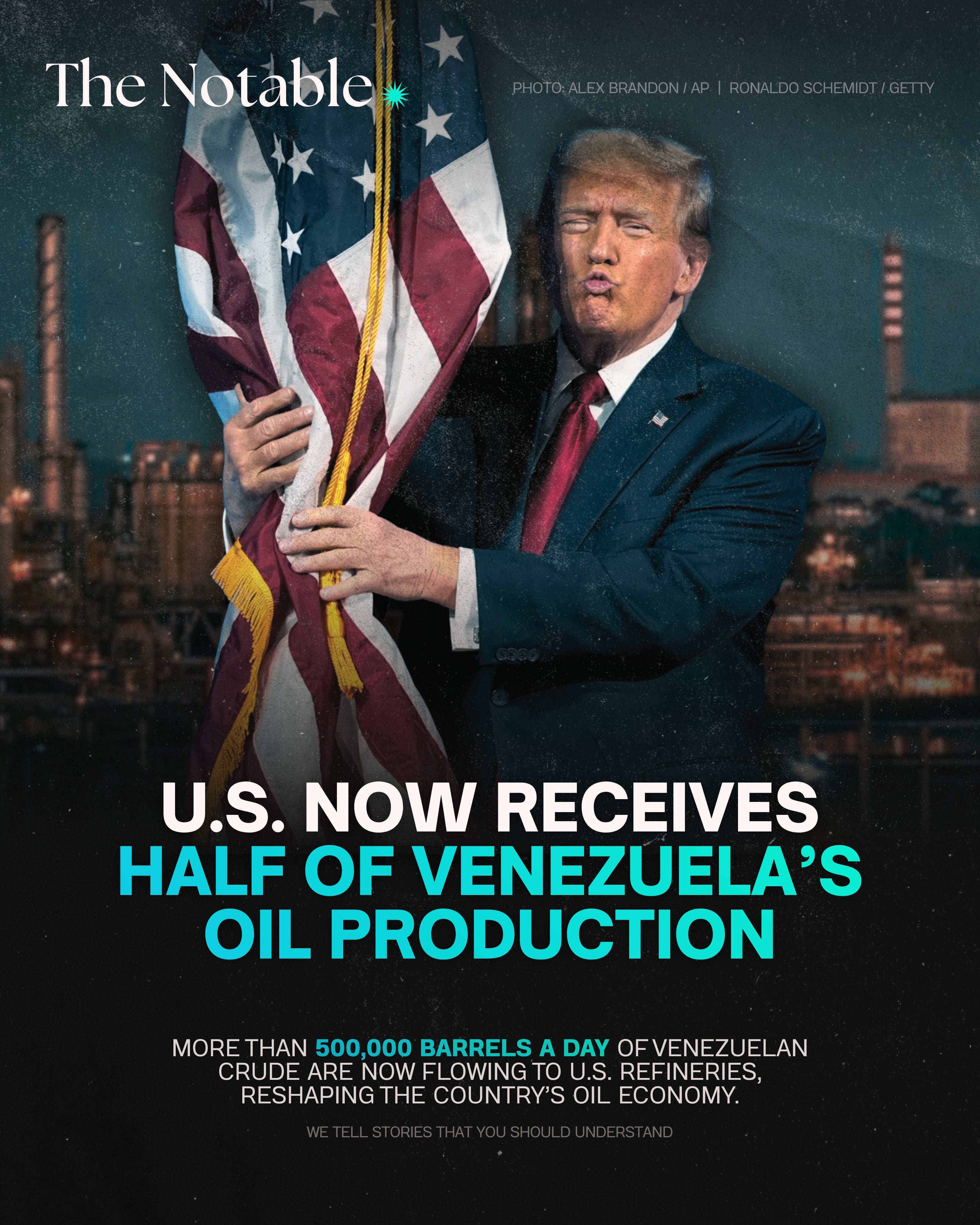
According to U.S. Energy Under Secretary Kyle Haustveit, more than 500,000 barrels of Venezuelan crude per day are now flowing to U.S. refineries. Venezuela is currently producing roughly 1.25 million barrels per day, meaning approximately half of its output is reaching the United States.
The figure, reported by Reuters on August 18, represents a striking reversal from the years when Washington used sanctions to restrict Venezuela’s access to international oil markets.
The United States is now becoming the most important destination for Venezuelan crude.
And the relationship is becoming more complicated than a simple buyer-and-seller arrangement.
Washington is increasingly involved in the functioning of Venezuela’s oil economy itself.
From sanctions to oil flows
For years, Venezuela’s oil industry was at the center of Washington’s pressure campaign against Nicolás Maduro’s government.
The United States imposed sweeping sanctions on Venezuela’s state oil company, PDVSA, restricting its ability to sell crude and access the American financial system.
The consequences were severe.
Venezuela possesses some of the world’s largest proven oil reserves, but its production capacity deteriorated dramatically because of years of underinvestment, operational failures, sanctions and political instability.
As Venezuelan crude became increasingly difficult to sell in Western markets, China became one of the country’s most important destinations.
That relationship is now being reshaped.
Following the dramatic change in U.S.-Venezuela relations in early 2026, Washington began facilitating Venezuelan oil sales and allowing greater access to U.S. markets.
American refiners, particularly those equipped to process heavy crude, became natural buyers.
The result has been a rapid redirection of Venezuela’s oil exports toward the United States.
Why American refineries want Venezuelan crude
There is an important technical reason behind this shift.
Venezuelan oil is generally heavy and relatively sulfur-rich, meaning it requires specialized refining capacity.
Some U.S. refineries, particularly along the Gulf Coast, were historically designed to process precisely this kind of crude.
That creates an unusual alignment.
Venezuela needs reliable buyers and the infrastructure, technology and investment required to restore production.
Some American refiners, meanwhile, have facilities capable of processing Venezuelan heavy crude.
The geography also matters.
Venezuela is relatively close to the United States compared with many alternative sources of heavy crude. Transporting Venezuelan oil to American Gulf Coast refineries can therefore be commercially attractive when the political and regulatory environment permits it.
This helps explain why Venezuelan crude can return to the American market relatively quickly once restrictions are eased.
The U.S. is becoming more than a customer
Perhaps the most consequential aspect of the new relationship is that the United States is not simply purchasing Venezuelan oil.
It is also supplying Venezuela with materials needed to keep that oil moving.
Haustveit said the United States is sending more than 100,000 barrels per day of naphtha to Venezuela.
Naphtha can be used as a diluent to make Venezuela’s extremely heavy crude easier to transport and process.
That creates a form of energy interdependence.
Venezuela sends crude north.
The United States sends material south that helps Venezuela produce and move that crude.
The two economies are therefore becoming linked through the same energy system.
Venezuela’s production is still far below its potential
The headline figure of 1.25 million barrels per day should not obscure the condition of Venezuela’s oil industry.
The country has enormous reserves, but reserves are not the same thing as production capacity.
Years of declining investment and deteriorating infrastructure left Venezuela with a much smaller operational oil industry than its geological resources would suggest.
Reuters reported on August 19 that SLB and Formentera Partners were working to reactivate drilling rigs in Venezuela, but only two onshore drilling rigs were then operational.
That illustrates the scale of the challenge.
Increasing exports does not automatically mean Venezuela has rebuilt its oil industry.
The country still needs new investment, drilling activity, maintenance, equipment, skilled personnel and infrastructure rehabilitation to sustainably increase production.
Why Washington wants Venezuelan oil flowing again
The U.S. interest goes beyond individual shipments.
Venezuela possesses the world’s largest proven crude oil reserves, according to widely cited international energy data.
For Washington, reopening Venezuela’s energy sector creates several potential advantages.
First, it provides American refiners with access to a geographically close source of heavy crude.
Second, it creates opportunities for U.S. energy companies to participate in the rehabilitation of Venezuela’s oil industry.
Third, greater American involvement gives Washington substantial leverage over a strategically important resource base.
And fourth, increasing Venezuelan production could add additional barrels to global markets.
That does not mean Venezuelan oil alone can transform global prices. Venezuela’s production remains modest compared with the largest global producers.
But restoring production from a country with such enormous reserves could become strategically important over the longer term.
The China question
The shift also has geopolitical implications.
For years, Venezuela developed increasingly close economic ties with China, particularly as U.S. sanctions made Western markets more difficult to access.
Chinese companies and traders became deeply involved in Venezuelan oil flows.
That did not make Venezuela economically independent. But it gave Caracas an alternative to the U.S.-dominated financial and energy system.
The current shift changes that equation.
If roughly half of Venezuelan production is now flowing to U.S. refineries, Washington is becoming far more important to the country’s energy economy than it was during the sanctions era.
That does not mean Venezuela has abandoned China.
It means the center of gravity of its oil trade is changing.
A new form of U.S. leverage
The transformation creates an important strategic dynamic.
Washington once exercised influence over Venezuela primarily by restricting its access to markets.
Now it can potentially exercise influence through market access itself.
That distinction matters.
If Venezuelan production becomes increasingly dependent on American buyers, American refiners, American technology and U.S.-controlled financial channels, Washington could acquire considerable leverage over the future direction of Venezuela’s energy industry.
For Caracas, the trade-off is equally significant.
Greater access to the American market could generate revenue, investment and production growth.
But greater dependence on that market could also reduce Venezuela’s room to maneuver geopolitically.
The country could move from being economically constrained by U.S. sanctions to being increasingly integrated into a U.S.-centered energy system.
The infrastructure bottleneck
The biggest limitation may ultimately be physical rather than political.
Venezuela cannot simply decide to double production overnight.
Its oil infrastructure has suffered from years of deterioration.
Wells need to be rehabilitated. Pipelines require maintenance. Upgraders and processing facilities need investment. Ports and storage infrastructure must operate reliably. Venezuela also needs the specialized equipment and inputs required to handle its unusually heavy crude.
This is why the renewed involvement of major international oil companies matters.
The return of foreign capital and technical expertise could eventually allow Venezuela to raise production substantially.
But rebuilding an oil industry is measured in years, not weeks.
What happens next
The critical question is whether the current increase in exports becomes the beginning of a much larger production recovery.
If investment accelerates, Venezuela could potentially increase output significantly from its current level.
That would create a larger supply base for U.S. refiners and potentially strengthen Washington’s position in Venezuela’s energy sector.
But several variables will determine whether that happens.
The durability of U.S.-Venezuela relations will be crucial. So will the regulatory environment, the willingness of international oil companies to invest, Venezuela’s infrastructure constraints and the country’s ability to maintain production.
There is also the broader global oil market.
More Venezuelan crude reaching international markets could eventually add supply, although the scale and speed of any increase would depend on how quickly Venezuela can restore damaged production capacity.
The bigger shift
The most important development is therefore not simply that the United States is now receiving roughly half of Venezuela’s oil output.
It is what that number represents.
For years, Washington attempted to pressure Venezuela by isolating its oil industry.
Now, the United States is becoming deeply integrated into that same industry.
American refineries are buying Venezuelan crude. U.S. companies are looking at opportunities in Venezuela. American supplies such as naphtha are helping Venezuela process and transport its oil.
The relationship has effectively moved from economic pressure to economic integration.
And because Venezuela sits on one of the world’s largest oil reserves, that integration could become strategically significant well beyond the energy market.
The question is no longer whether Venezuela’s oil matters to the United States.
It is how much influence the United States will ultimately gain over the future of Venezuela’s oil industry.