


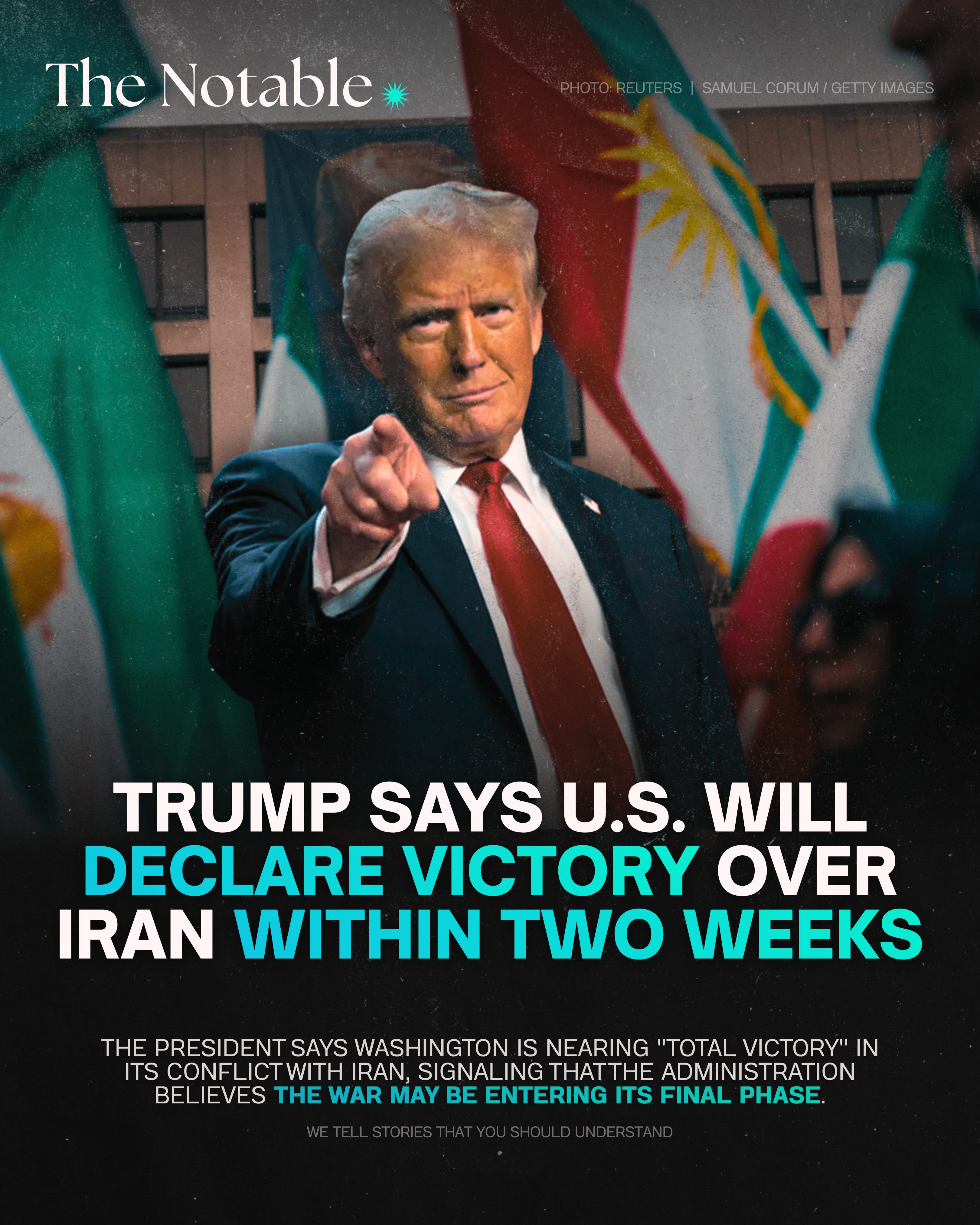
The Trump administration is signaling that the conflict with Iran may be approaching a decisive turning point.
Speaking during a tele-rally for Senator Lindsey Graham, President Donald Trump said the United States would declare “total victory” over Iran within the next two weeks. The remark is one of the strongest indications yet that the White House believes its objectives in the conflict have largely been achieved and that an endgame may be taking shape.
For months, the confrontation between the United States, Israel, and Iran has dominated geopolitical calculations across the Middle East. Military operations, missile exchanges, and diplomatic maneuvering have transformed what began as a regional security crisis into one of the most consequential international confrontations in recent years.
Now, the administration appears eager to signal that the conflict is moving toward a conclusion.
A Remark With Strategic Weight
Trump’s statement matters not because a victory declaration has already been made, but because it reveals how the White House currently views the battlefield and diplomatic landscape.
Governments rarely speak in terms of “victory” unless they believe they have achieved key strategic objectives. While officials have not publicly detailed what would constitute total victory, the administration’s language suggests confidence that Iran’s ability to challenge U.S. and allied interests has been significantly degraded.
The statement also arrives amid reports of ongoing diplomatic efforts aimed at reducing tensions and establishing a framework for longer-term stability.
In other words, Washington appears to be pursuing a familiar strategy: applying maximum military pressure while simultaneously positioning itself for a negotiated outcome.
The Challenge of Defining Victory
Yet victory in modern conflicts is rarely straightforward.
Military success and political success are not always the same thing. History is filled with examples of governments achieving battlefield objectives only to struggle with the longer-term consequences that follow.
Iran remains one of the Middle East’s most influential regional powers. Its network of relationships, strategic partnerships, and regional influence extends far beyond conventional military capabilities. Even if the current phase of fighting subsides, the broader competition between Washington and Tehran is unlikely to disappear.
This raises an important question: what exactly would a declaration of victory mean?
Would it signal the end of active hostilities? A diplomatic agreement? The achievement of specific military objectives? Or simply a political judgment that the administration’s goals have been met?
At this stage, those details remain unclear.
Why Markets and Governments Are Watching Closely
The significance of Trump’s comments extends beyond the battlefield.
Any indication that the conflict is nearing an end has immediate implications for energy markets, regional security calculations, and global diplomacy.
The Middle East remains one of the world’s most strategically important regions for energy production and trade. Prolonged instability raises concerns about supply disruptions, while signs of de-escalation can ease pressure on global markets.
Regional governments are also watching closely. For allies of the United States, a successful conclusion could reinforce confidence in American security commitments. For rivals, it could reshape calculations about U.S. power and willingness to project force abroad.
The outcome may also influence broader geopolitical dynamics at a time when major powers are increasingly competing for influence across multiple regions simultaneously.
The Bigger Picture
Perhaps the most important aspect of Trump’s statement is what it suggests about the administration’s broader strategy.
The message is not simply that the United States believes it is winning.
The message is that Washington wants both allies and adversaries to believe the conflict is nearing a favorable conclusion.
Whether that prediction proves accurate remains to be seen.
No formal victory declaration has been issued. No comprehensive settlement has been publicly announced. Military and diplomatic developments over the coming days could still alter the trajectory of events.
But one thing is clear: the White House is beginning to talk less about managing the conflict and more about how it ends.
And in geopolitics, that shift in language often matters as much as the events themselves.
What to Watch Next
Three developments will determine whether Trump’s prediction becomes reality:
First, whether military operations continue to decline or intensify.
Second, whether diplomatic negotiations produce a public framework for ending the confrontation.
Third, how Iran responds to growing suggestions that the conflict is entering its final phase.
The next two weeks may not simply determine the outcome of this particular conflict.
They could reveal how the United States intends to define victory in a rapidly changing Middle East.