


Trump’s Ultimatum to Iran Signals a Dangerous Turning Point
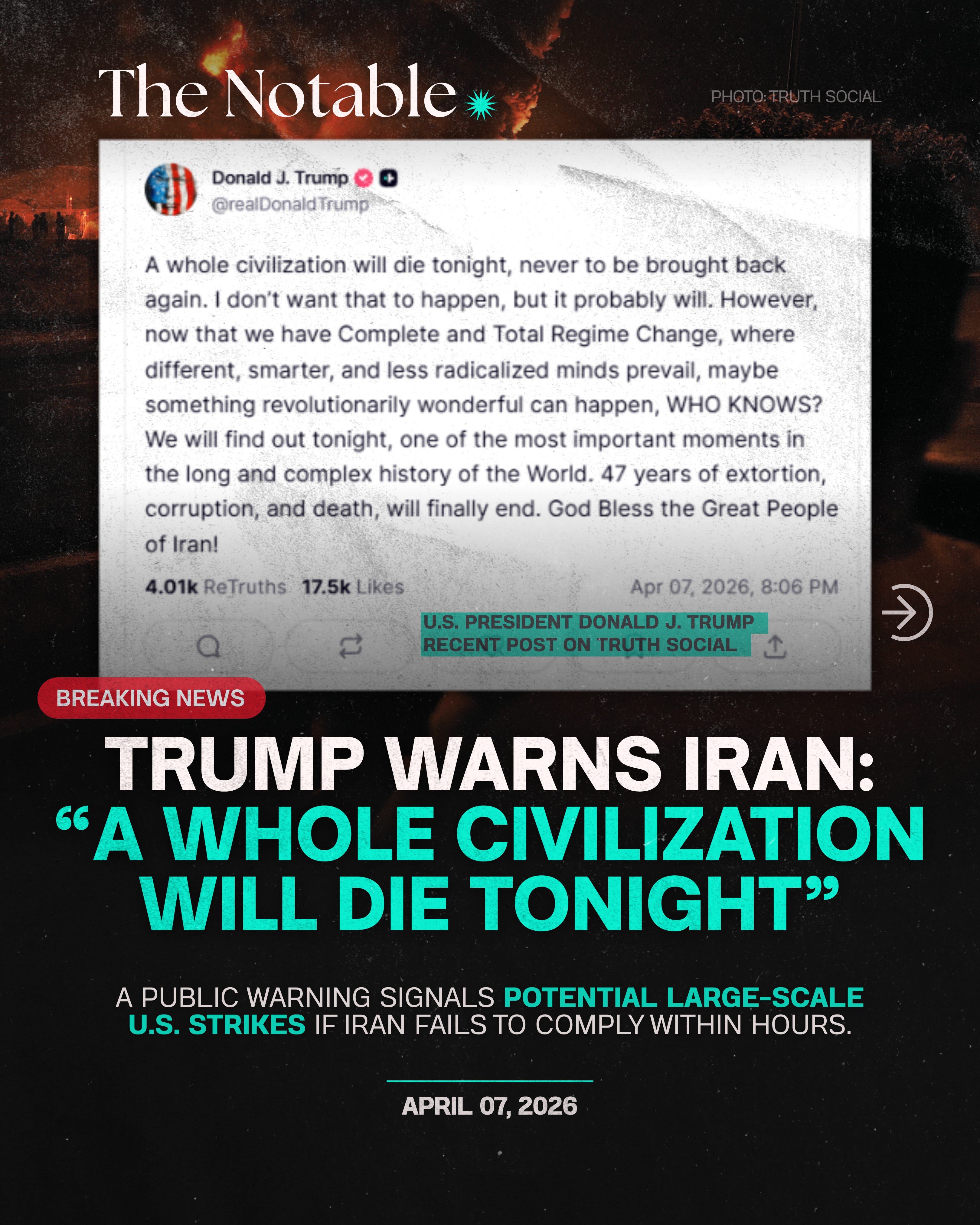
On April 7, President Donald Trump issued one of the starkest warnings of the current conflict with Iran, writing that “a whole civilization will die tonight” if Tehran fails to meet a U.S. deadline.
The message was not delivered through formal diplomacy, but through Truth Social. Yet its implications are unmistakably real.
At the center of the ultimatum is a clear demand: Iran must reopen the Strait of Hormuz and agree to U.S. terms, or face immediate consequences. Those consequences, according to U.S. officials, could include targeted strikes on critical infrastructure, including energy facilities and transport networks.
This is no longer a slow escalation. It is a compressed moment of decision.
What the U.S. Is Signaling
The language used by Trump is extreme, but the underlying policy direction has been building for weeks.
Washington has already signaled a willingness to expand its targets beyond military assets to include strategic infrastructure. That shift matters. Striking systems like power grids, ports, or bridges does not just degrade a state’s military capacity. It risks disrupting civilian life at scale.
In effect, the U.S. is communicating that it is prepared to impose systemic pressure on Iran, not just battlefield losses.
The phrase “civilization” may be rhetorical. But the strategy behind it is not.
Why the Strait of Hormuz Matters
The urgency of the ultimatum is tied directly to geography.
The Strait of Hormuz is one of the most critical chokepoints in the global economy. A significant portion of the world’s oil supply passes through it every day. Any disruption, even temporary, has immediate consequences for energy prices, supply chains, and financial markets.
By demanding its reopening, the U.S. is not only addressing a regional security issue. It is attempting to stabilize a global economic artery.
Iran, however, sees the strait as leverage. Restricting access raises the cost of confrontation for the West and forces international attention.
This is what makes the current standoff so volatile. Both sides are operating with incentives that push toward escalation.
Iran’s Position: Resistance Over Concession
So far, Iran has not shown signs of backing down.
Officials have rejected U.S. demands and signaled a willingness to endure pressure rather than concede under threat. Reports indicate calls for internal mobilization, including efforts to protect key infrastructure and prepare for further strikes.
This suggests Tehran views the ultimatum not as a final offer, but as part of a broader coercive strategy it must resist.
That calculation carries risk.
Because if neither side yields, the logic of the situation narrows quickly. Deadlines expire. Credibility becomes a factor. And actions begin to replace signals.
A Conflict at the Edge of Expansion
What happens next depends on hours, not weeks.
If Iran does not comply, U.S. military action is likely to follow, potentially targeting infrastructure with wide-reaching consequences. The scale and precision of those strikes will determine whether the conflict remains contained or expands across the region.
Retaliation is also a key variable. Iran has options that extend beyond its borders, including regional proxies and asymmetric responses that could widen the theater of conflict.
This is how localized confrontations become systemic crises.
The Larger Pattern
There is a deeper pattern emerging beneath the immediacy of the moment.
Modern conflicts are increasingly defined not just by territory or military engagement, but by control over systems. Energy flows. Trade routes. Infrastructure networks. Information channels.
The current standoff reflects that shift.
The United States is leveraging its capacity to disrupt systems. Iran is leveraging its position within them.
And the rest of the world is exposed to the consequences.
What to Watch
The immediate focus is simple: whether Iran responds before the deadline, and whether the United States follows through.
But beyond that, three questions matter:
Will infrastructure become a normalized target in this conflict?
Can the Strait of Hormuz remain open under sustained pressure?
And how far are both sides willing to go to maintain credibility?
The answers will shape not just this crisis, but the next phase of global conflict dynamics.