


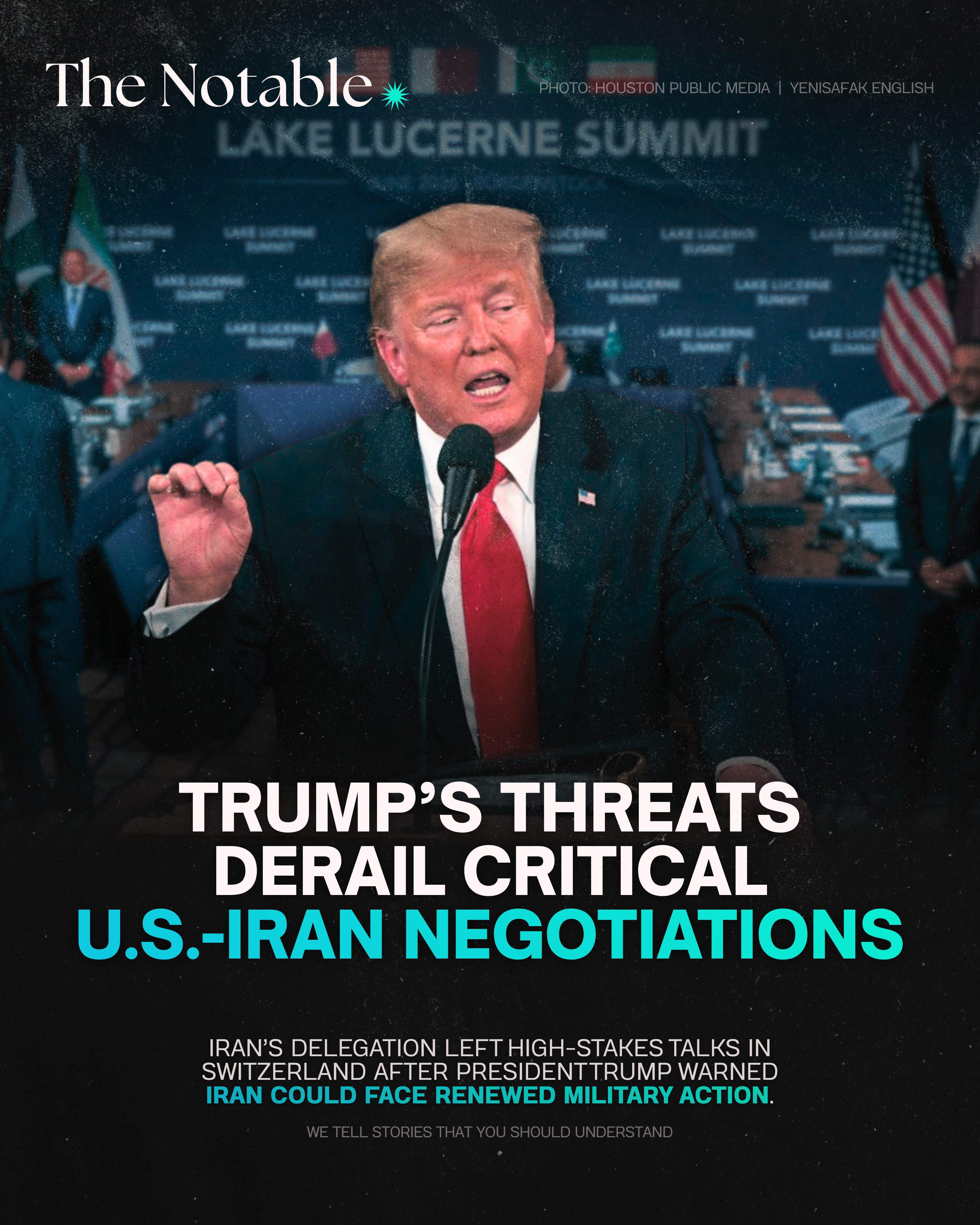
A fragile diplomatic breakthrough between Washington and Tehran has been thrown into uncertainty after Iran’s negotiating team reportedly walked out of high-stakes talks in Switzerland following new threats from President Donald Trump.
According to Iranian state media, Tehran’s delegation left the negotiations in protest after Trump warned that Iran could face renewed military action if regional attacks continued. The talks, which were being held in Switzerland and involved senior U.S. officials led by Vice President JD Vance, were intended to advance implementation of the recently signed U.S.-Iran peace framework following months of conflict across the Middle East.
The incident marks the most serious setback yet for the post-war diplomatic process.
While it remains unclear whether the Iranian delegation’s departure was temporary or a sign of broader collapse, the episode immediately exposed how fragile the new agreement remains despite recent attempts at de-escalation.
A Deal Already Under Pressure
The Switzerland negotiations came only days after Washington and Tehran agreed to a broader framework intended to stabilize the region after months of military escalation involving Iran, Israel, Hezbollah, and U.S. forces.
The agreement reportedly focused on several major areas:
sanctions relief
maritime security
ceasefire implementation
nuclear oversight
regional de-escalation
Mediators including Qatar and Pakistan played key roles in bringing both sides back to the negotiating table after the recent conflict pushed the region close to a wider war.
But even before the latest diplomatic crisis, tensions had already begun resurfacing.
Iran accused the United States of failing to restrain Israeli military operations in Lebanon following the agreement, while disputes also emerged over security in the Strait of Hormuz, one of the world’s most strategically important energy chokepoints.
That growing mistrust now appears to have spilled directly into the negotiations themselves.
Trump and Vance Sending Different Signals
One of the clearest dynamics emerging from the talks is the apparent contradiction between the White House’s diplomatic and military messaging.
While Vice President JD Vance reportedly pursued a more conciliatory tone during negotiations in Switzerland, Trump publicly threatened renewed strikes against Iran if attacks linked to Iranian-backed groups continued in the region.
For Tehran, the remarks appeared to undermine confidence that Washington was fully committed to the diplomatic process.
The result was an immediate escalation inside negotiations that were supposed to reinforce stability.
The incident also highlights a broader challenge inside high-stakes diplomacy: agreements signed on paper can quickly unravel if political signaling, military pressure, and strategic mistrust continue operating at the same time.
Why The Strait of Hormuz Matters
The negotiations carry implications far beyond the Middle East.
Part of the discussions focused on maritime security around the Strait of Hormuz, the narrow waterway through which a significant share of the world’s oil exports passes every day.
Any instability in the corridor can disrupt global energy markets, shipping flows, insurance costs, and oil prices worldwide.
That is why the collapse of talks would not simply represent a regional diplomatic failure. It would raise fears of renewed volatility across global energy and financial markets at a moment when governments are already managing economic uncertainty and geopolitical fragmentation.
What Happens Next
For now, officials from multiple countries are reportedly trying to keep communication channels open and prevent a full diplomatic breakdown.
It remains uncertain whether Iran’s delegation will return to negotiations or whether both sides can rebuild enough trust to continue implementing the agreement reached earlier this week.
The next few days could determine whether the Middle East is entering a genuine stabilization phase after months of war, or merely experiencing a temporary pause before another confrontation.
What was supposed to be the beginning of a post-war diplomatic reset has now become a test of whether the agreement can survive the political and military pressures surrounding it.