


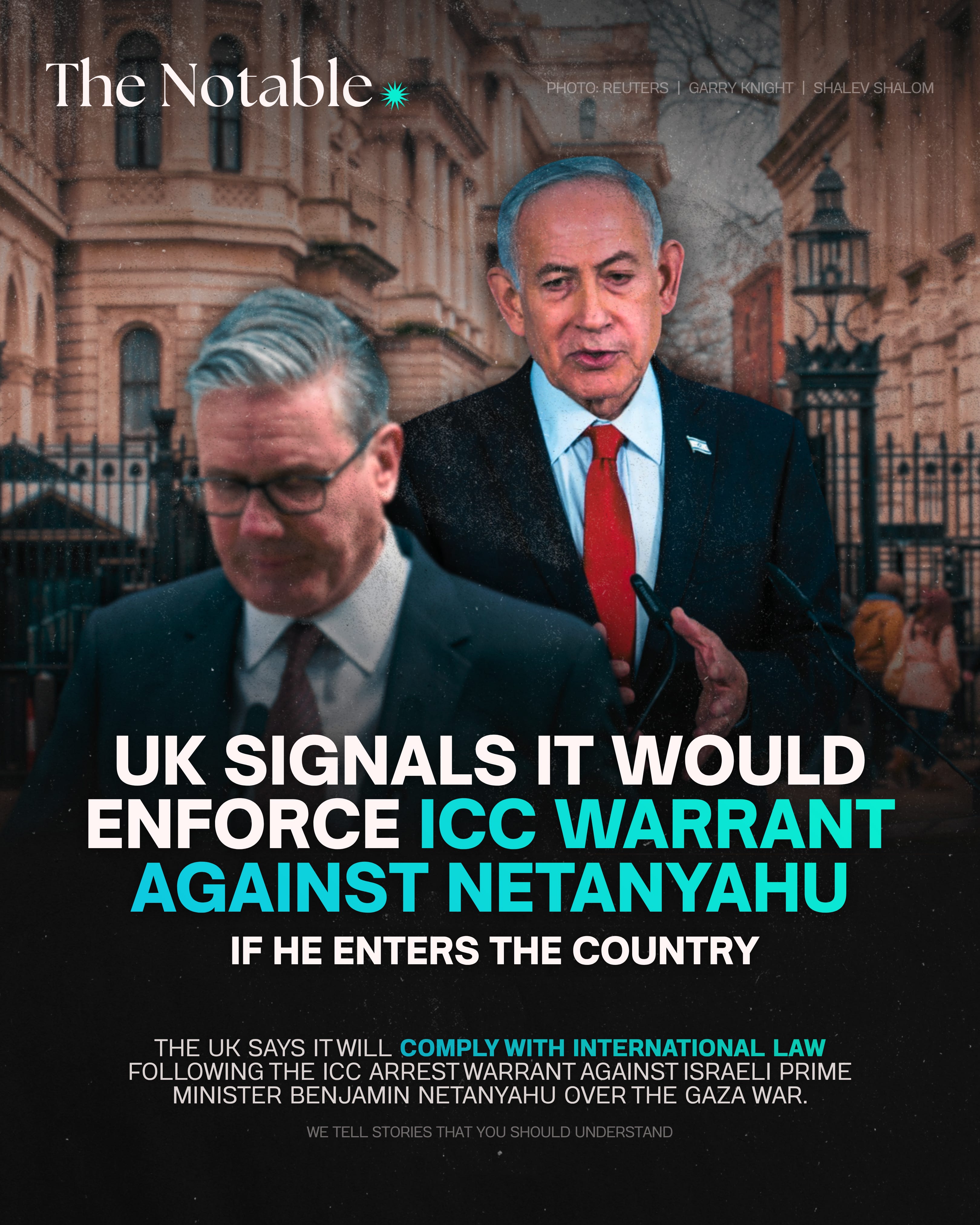
The United Kingdom has signaled it would comply with the International Criminal Court’s arrest warrant against Israeli Prime Minister Benjamin Netanyahu if he enters British territory, placing one of Israel’s closest Western allies at the center of a growing geopolitical and legal debate.
The issue stems from the ICC’s November 2024 decision to issue arrest warrants for Netanyahu and former Israeli Defense Minister Yoav Gallant over alleged war crimes and crimes against humanity linked to the Gaza war.
While Britain did not independently issue an arrest order, the UK government indicated it would comply with its obligations under international law. Asked whether Netanyahu would face arrest if he entered the country, the former government of Keir Starmer said Britain would “always comply” with its legal obligations under the ICC framework.
The statement was widely interpreted as confirmation that the UK would enforce the warrant if required.
Why the Situation Is Politically Significant
The development places Britain in a difficult diplomatic position.
The UK has historically been one of Israel’s closest Western partners, maintaining strong political, military, and intelligence ties across multiple governments. The possibility of enforcing an international arrest warrant against a sitting Israeli prime minister would have major diplomatic consequences.
At the same time, Britain is also a member of the Rome Statute, the treaty that established the ICC. As a state party, the UK is expected to cooperate with ICC arrest warrants and broader international legal processes.
The issue is now exposing a growing tension facing many Western governments: balancing strategic alliances with commitments to international legal institutions.
Israel Rejects the ICC Case
Israel has strongly rejected the ICC’s allegations and accused the court of political bias and antisemitism.
Israeli officials argue the court lacks jurisdiction and say the warrants unfairly target Israel while failing to fully account for the context of the war following the October 7 Hamas attacks.
The Israeli government has also warned that the ICC’s actions could damage ongoing diplomatic and security efforts in the region.
A Growing Divide Among Western Governments
The Netanyahu warrant has already created visible divisions among Western allies.
Some countries have indicated they would comply with the ICC warrants if Netanyahu traveled to their territory. Others have questioned the court’s authority or avoided giving direct answers about enforcement.
The debate is increasingly becoming larger than Israel itself.
Supporters of the ICC argue the case is a critical test of whether international law can be applied consistently, including against leaders aligned with the West. Critics, however, argue the court risks becoming politicized and selectively enforced.
Why This Matters Beyond Gaza
The controversy is rapidly evolving into a broader debate about the future of international law and the credibility of global institutions.
For decades, Western governments have promoted the idea of a rules-based international order grounded in accountability and legal norms. But critics have long argued those standards are often applied unevenly between allies and adversaries.
The Netanyahu warrant is now becoming one of the clearest modern tests of that argument.
The immediate question is whether Netanyahu will limit travel to ICC member states to avoid legal risk. More broadly, the case could influence how international law is enforced in future conflicts involving powerful states and close Western allies.