


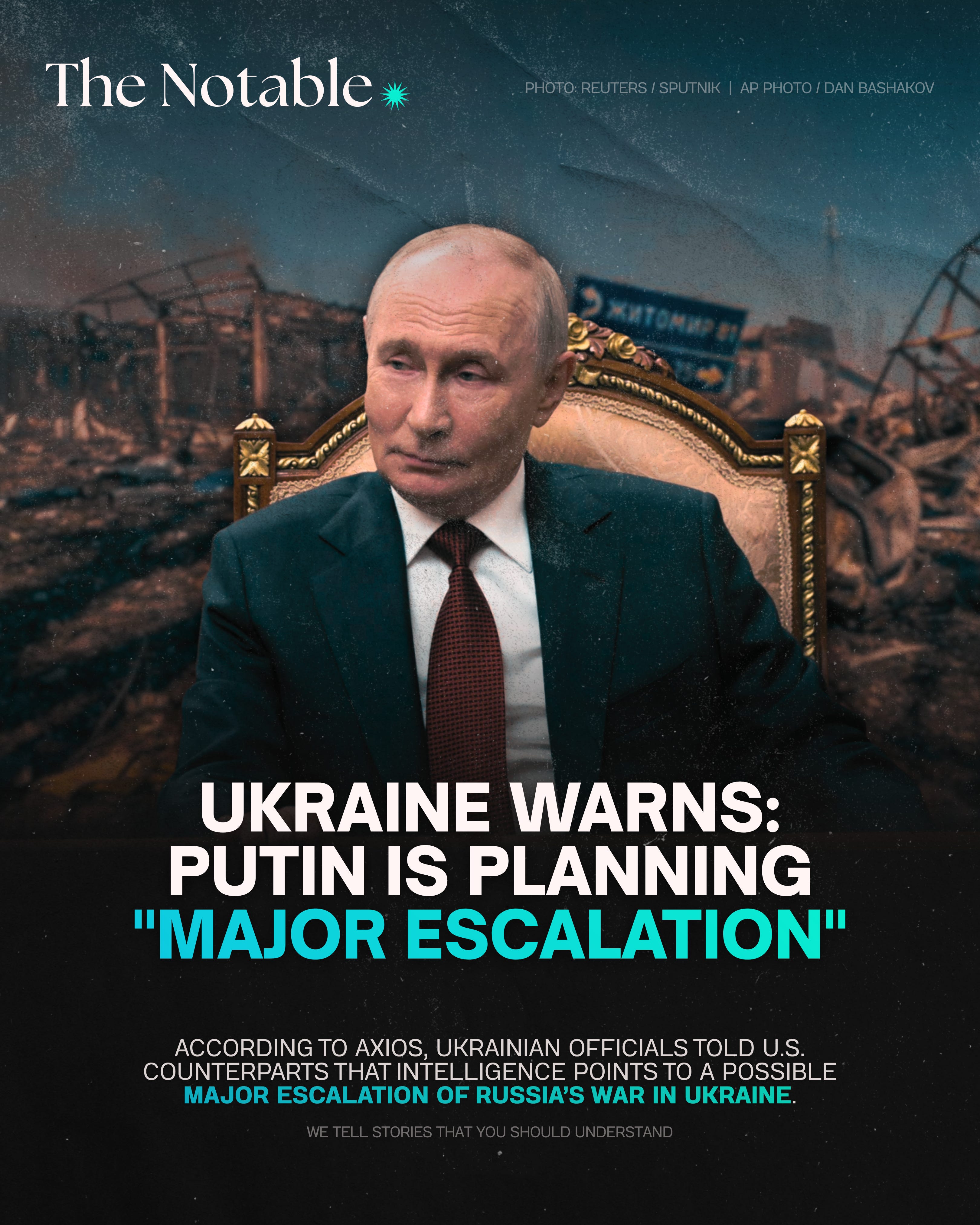
Ukraine has warned the United States that intelligence indicates Russian President Vladimir Putin may be preparing a major escalation of the war, according to an August 29 report by Axios.
The warning comes at a particularly sensitive moment. Washington is attempting to revive diplomatic efforts aimed at ending the war, while Kyiv remains deeply concerned about Russia’s intentions and military strategy.
The Ukrainian assessment does not establish exactly what Moscow may do, when it could happen, or whether Putin has made a final decision to escalate. It is therefore important to distinguish between an intelligence warning about possible Russian intentions and confirmation of an imminent military operation.
But the disclosure is significant because Ukrainian officials reportedly raised the concern directly with U.S. counterparts while diplomatic channels with Moscow remain active.
The Timing Is Significant
The warning emerged alongside a highly unusual development in U.S.-Russia contacts.
CIA Director John Ratcliffe reportedly traveled secretly to Moscow and met with senior Russian intelligence officials. The discussions came as the United States seeks to better understand Russia’s position on restarting negotiations with Ukraine.
The meetings illustrate the complicated situation facing Washington.
On one track, U.S. officials are attempting to determine whether another diplomatic opening with Moscow is possible. On another, Ukrainian officials are warning that Russia may be preparing to increase military pressure.
That creates a fundamental question for the diplomatic process: Is Moscow genuinely moving toward negotiations, or is it using the diplomatic channel while preparing for another phase of the war?
What the Intelligence Does Not Tell Us
The phrase “major escalation” is important, but it does not describe a specific military operation.
The reported intelligence does not publicly establish that Russia is preparing to launch a new ground offensive against Kyiv. It also does not confirm that Putin has ordered a new mass mobilization or that a particular attack is imminent.
Those distinctions matter.
Intelligence assessments can identify preparations, intentions or possible scenarios without proving that a decision has been made. Military plans can also change rapidly depending on battlefield conditions, political calculations and diplomatic developments.
For now, the publicly reported information points to a warning about potential Russian intentions, rather than confirmation of a specific attack.
Why Washington Is Paying Attention
The United States remains central to any serious attempt to end the Russia-Ukraine war.
Washington has sought to establish whether Moscow and Kyiv can return to meaningful negotiations, including discussions involving their respective leaders. Direct contacts with Russian officials are therefore an important part of understanding whether diplomacy has a realistic path forward.
But Ukraine’s warning introduces another layer of uncertainty.
If Russian leaders are simultaneously considering a significant military escalation, Moscow’s calculations may be very different from those assumed by negotiators. A government preparing to improve its position on the battlefield could have less incentive to make major concessions at the negotiating table.
That does not necessarily mean diplomacy is failing. It does mean that military developments and diplomatic negotiations cannot be viewed separately.
The Broader Strategic Picture
Russia’s war against Ukraine has repeatedly combined military pressure with periods of diplomatic engagement.
For Kyiv, the central concern is that Russia could use negotiations to buy time, improve its military position or test Western willingness to maintain support for Ukraine.
For Moscow, maintaining military pressure can strengthen its leverage in negotiations if Russian leaders believe battlefield gains will eventually force Ukraine and its partners to accept more favorable terms for Russia.
The reported Ukrainian warning therefore matters beyond the possibility of another attack.
It raises questions about Russia’s strategic objectives, the credibility of the current diplomatic process and the ability of the United States to influence Moscow’s calculations.
What Happens Next
The most important indicators will be concrete developments rather than rhetoric.
U.S. and Ukrainian officials will be watching for evidence of changes in Russian military posture, including unusual troop movements, deployments, missile activity, logistics preparations or changes in the intensity and geographic scope of Russian attacks.
At the same time, diplomatic contacts with Moscow will provide another important signal.
If negotiations advance while Russian military activity remains controlled, the escalation warning may ultimately prove to have reflected contingency planning rather than an imminent decision.
If diplomatic efforts stall and Russia simultaneously increases military pressure, the Ukrainian assessment could become considerably more consequential.
The Bottom Line
Ukraine is warning Washington that intelligence points to a possible “major escalation” of Russia’s war.
That warning has not been accompanied by public confirmation of a specific Russian offensive or attack plan. But its timing is notable: the United States is pursuing renewed diplomatic engagement with Moscow at the same moment Ukrainian officials are warning that Putin may be preparing to intensify the conflict.
The immediate question is not simply whether Russia will escalate.
It is whether diplomacy can prevent an escalation that Ukraine believes may already be under consideration.