


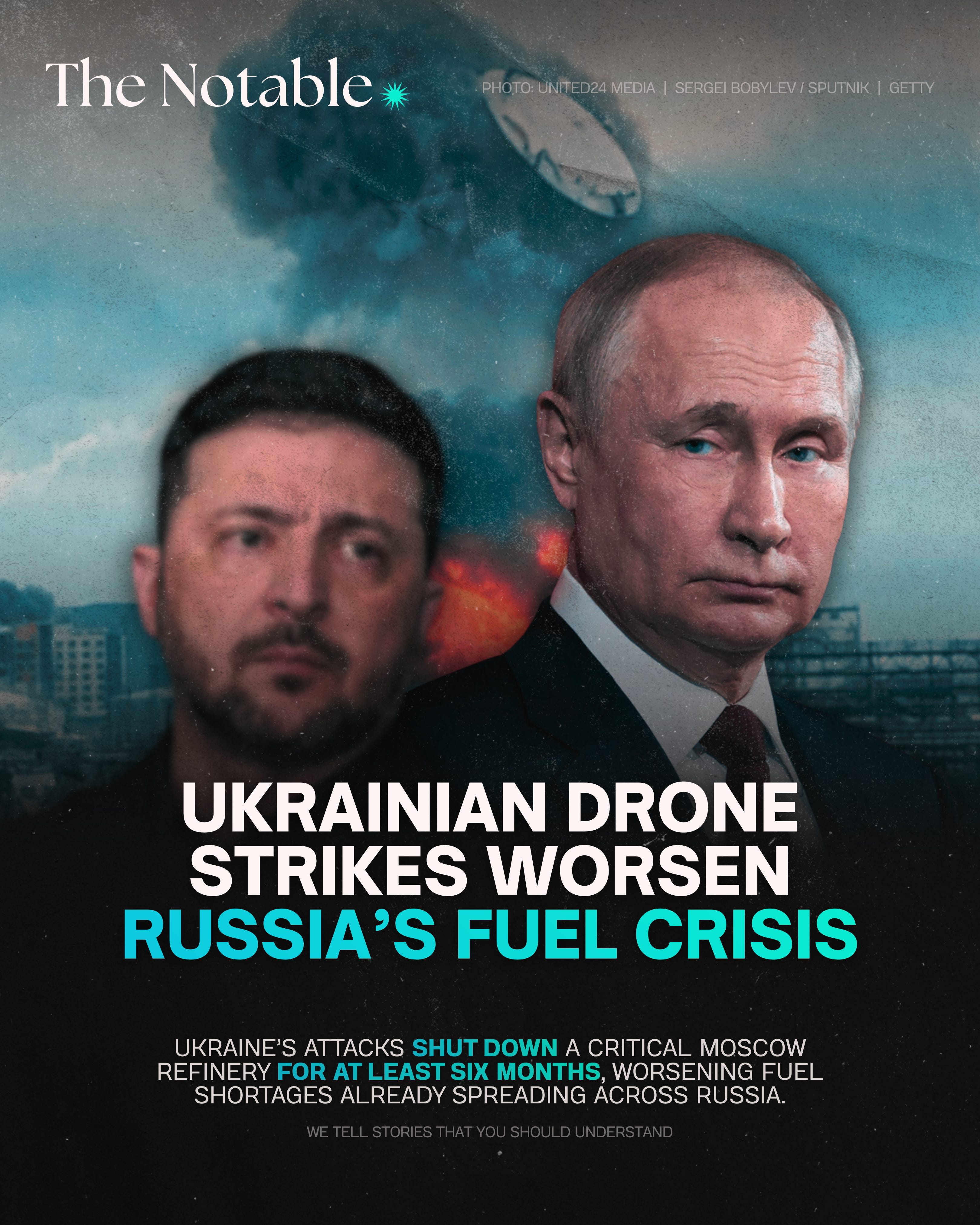
Ukraine’s expanding drone campaign against Russian energy infrastructure is now creating visible economic strain inside Russia itself.
Repeated Ukrainian strikes on Moscow’s Gazprom Neft refinery this month have forced one of the country’s most strategically important fuel facilities offline, worsening fuel shortages already spreading across multiple Russian regions.
Industry sources say the refinery may remain partially or fully shut down for at least six months, with some repair estimates extending into 2027. The disruption marks one of the most serious blows yet to Russia’s domestic fuel system since the war began.
A Critical Refinery Near Moscow
The Moscow refinery was struck by Ukrainian drones on June 16 and again on June 18, damaging two major processing units responsible for much of the facility’s refining capacity.
The plant is one of Russia’s most important fuel hubs. It reportedly supplies around 40% of Moscow’s gasoline and as much as 70% of the wider region’s fuel and aviation needs.
That makes the attacks strategically significant not only because of the physical damage, but because of the refinery’s role in supporting daily economic activity in and around the Russian capital.
Unlike some previous strikes on fuel depots or storage sites, this attack targeted critical refining infrastructure itself, making repairs far more difficult and time-consuming.
Fuel Shortages Are Spreading
The refinery shutdown is intensifying broader supply pressures already affecting Russia’s domestic fuel market.
Reports indicate more than 20 Russian regions are now experiencing fuel shortages or disruptions. Some areas have introduced rationing measures, while Crimea reportedly suspended certain gasoline sales amid tightening supplies.
Russian gasoline production has reportedly fallen around 25% year-on-year in June as repeated refinery attacks disrupt processing capacity nationwide.
Russian authorities have publicly attributed shortages to seasonal demand and logistical complications. However, the timing and scale of the disruptions increasingly point to the cumulative impact of Ukraine’s sustained attacks on Russia’s refining network.
The Kremlin is now reportedly considering additional emergency measures, including possible diesel export bans, fuel import options, and broader market interventions aimed at stabilizing domestic supply.
The situation is particularly notable because Russia is one of the world’s largest energy exporters. The country continues exporting large volumes of crude oil globally, yet refinery disruptions are limiting its ability to convert that crude into usable domestic fuel.
Ukraine’s Strategy Is Expanding
The attacks also reflect a broader evolution in Ukraine’s wartime strategy.
Rather than focusing exclusively on military positions near the front lines, Kyiv is increasingly targeting Russia’s economic infrastructure deep inside the country. Oil refineries, fuel depots, logistics hubs, and energy facilities have become central targets in an effort to raise the economic and operational costs of the war for Moscow.
The strategy appears designed to pressure not only Russia’s military logistics network, but also the broader economic systems supporting the war effort.
Hitting a major refinery near Moscow carries symbolic weight as well. It demonstrates Ukraine’s growing ability to strike critical infrastructure close to Russia’s political and economic center despite Moscow’s extensive air defense systems.
The attacks also expose a deeper vulnerability within Russia’s wartime economy: energy infrastructure that is essential both for export revenue and for maintaining domestic stability.
What Happens Next
The longer the Moscow refinery remains offline, the greater the pressure on Russia’s fuel distribution system.
Moscow may still be able to manage localized shortages in the short term through redistribution, emergency imports, export restrictions, and government intervention. But continued attacks on refineries could create wider structural strain if disruptions persist.
Ukraine has already indicated the campaign is likely to continue. President Volodymyr Zelenskyy recently said Kyiv would maintain “preemptive” strikes against facilities supporting Russia’s war effort.
That raises an increasingly important question for Moscow: whether Russia can sustain domestic energy stability while its refining infrastructure remains under repeated attack.