


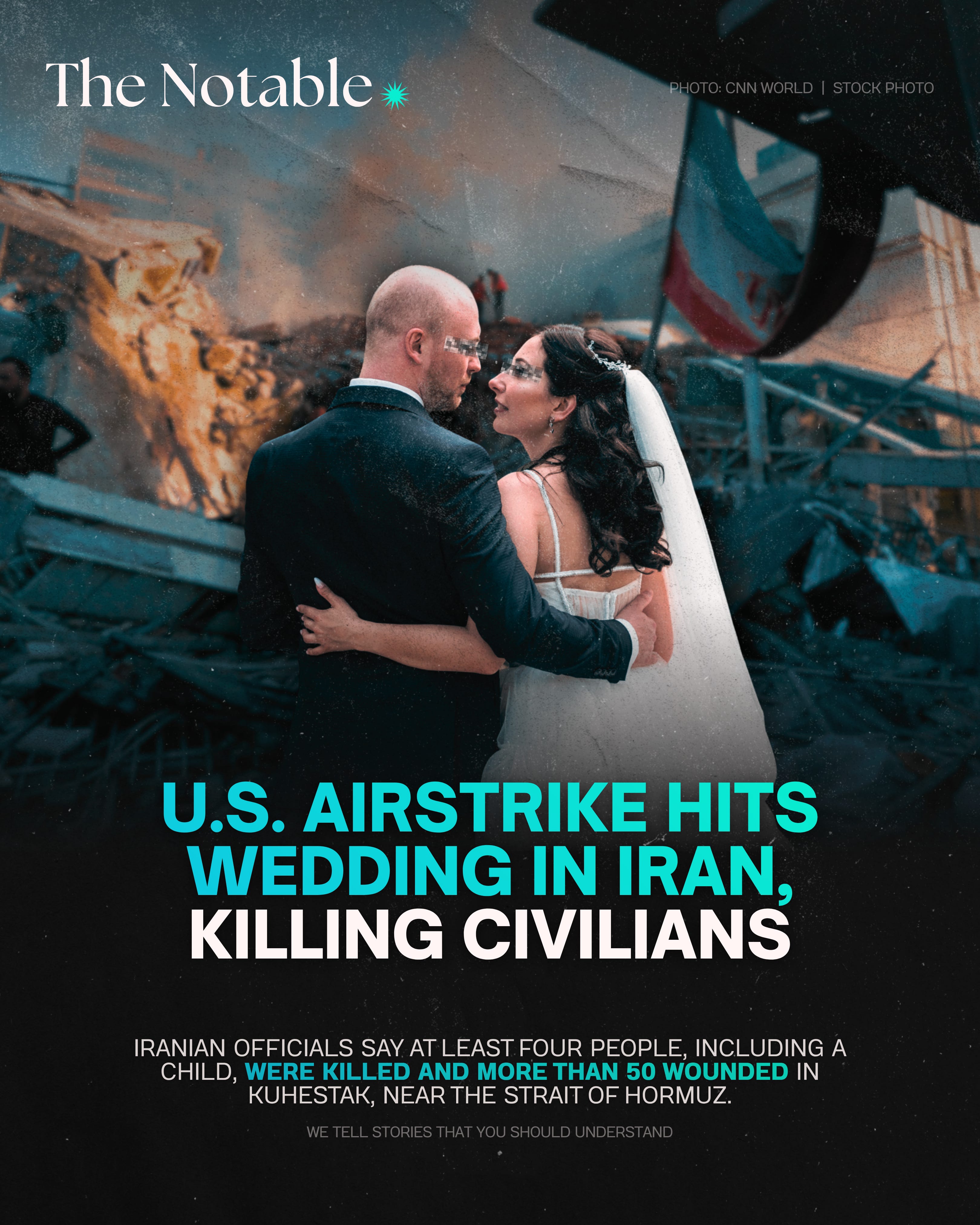
A U.S. airstrike has reportedly struck a residential building in Kuhestak village, Sirik County, Hormozgan province, where a wedding gathering was taking place.
Iranian authorities initially reported two deaths and more than 50 wounded. The Iranian Red Crescent later reported that at least four people had been killed, including a child, with more than 50 wounded. Subsequent Iranian officials reported higher casualty figures, illustrating that the toll remains fluid.
Iranian officials have said that many of those injured were women and children.
Images circulated after the strike showed damage to the building and injured civilians being treated at hospitals. The imagery has been attributed to Iranian sources, and independent verification of every detail surrounding the incident remains limited.
The location is significant. Kuhestak sits on Iran’s southern coast, close to the Strait of Hormuz, through which a substantial share of global oil and liquefied natural gas shipments normally pass.
What the United States Says It Was Targeting
The reported civilian casualties occurred during a broader U.S. military operation against Iranian targets.
The U.S. Central Command (CENTCOM) said American forces struck infrastructure associated with Iran’s Islamic Revolutionary Guard Corps (IRGC). The reported targets included air-defense systems, radar, maritime capabilities, mine-laying capabilities and communications infrastructure.
Washington has linked the operation to what it describes as Iranian threats against U.S. personnel and commercial shipping.
The U.S. military maintains that it does not target civilians.
That distinction is central to understanding the incident. There is currently no established evidence that the wedding itself was the intended target. Iranian authorities are reporting that a U.S. strike hit the residence where the wedding was being held, while Washington says its operation was directed at military infrastructure.
The precise military target involved in the incident has not been publicly established in the available reporting.
Why the Strait of Hormuz Is at the Center
The incident cannot be separated from the wider confrontation over the Strait of Hormuz.
The narrow waterway between Iran and Oman is one of the world’s most important energy chokepoints. Oil and gas shipments from major producers in the Persian Gulf rely heavily on the passage.
For Iran, control over or the ability to threaten shipping through the strait provides significant strategic leverage.
For the United States, protecting freedom of navigation and preventing attacks on commercial vessels is a major military and economic objective.
That is why recent U.S. operations have focused on Iranian maritime capabilities and alleged preparations to interfere with shipping.
The confrontation has therefore moved beyond a conventional exchange of strikes. It is increasingly centered on whether Iran can use the Strait of Hormuz as leverage, and whether the United States can prevent that without widening the conflict further.
From Maritime Confrontation to Direct Retaliation
The latest escalation followed a series of increasingly direct military actions.
The United States recently struck Iranian military assets connected to alleged preparations to deploy sea mines around the Strait of Hormuz. Iran subsequently launched missiles toward U.S. positions in the region.
Washington then carried out a broader series of strikes against Iranian military infrastructure.
The reported strike in Kuhestak occurred within that wider campaign.
Iran has warned that American attacks will produce further retaliation. The United States, meanwhile, has warned Tehran against attacking American forces or disrupting commercial shipping.
This creates a familiar escalation cycle:
U.S. strike → Iranian retaliation → further U.S. military action → increased pressure for another Iranian response.
The danger is that each successive round can expand the number of targets, the geographic area involved and the potential for civilian casualties.
The Civilian Cost Is Becoming a Strategic Issue
The reported deaths at the wedding gathering are significant not only because of the human toll, but because of what they could mean for the trajectory of the conflict.
Civilian casualties can rapidly alter the political calculations surrounding a war.
For Iran, images of injured children and civilians provide powerful evidence for portraying the American campaign as an attack on Iranian society rather than a limited operation against military infrastructure.
For Washington, the incident creates pressure to demonstrate that its targeting process is distinguishing military objectives from civilian areas.
That becomes particularly important as the United States conducts operations in densely populated or strategically important areas near Iran’s southern coast.
The question is therefore not simply how many people were killed.
It is also whether the incident becomes a catalyst for a broader escalation.
The Numbers Remain Unsettled
One important caveat is that casualty figures have changed as Iranian authorities have issued successive updates.
Initial reports put the death toll at two. The Iranian Red Crescent subsequently reported four deaths, including a child, and more than 50 wounded. Later Iranian officials reported five deaths and more than 60 wounded.
Different reports have therefore produced different figures.
That does not necessarily indicate that one side is deliberately misleading the public. Casualty numbers in the immediate aftermath of an airstrike often change as hospitals receive patients, missing people are accounted for and officials consolidate information.
For that reason, the most defensible description is that Iranian authorities have reported at least four civilian deaths and more than 50 wounded, while acknowledging that later figures have been higher.
What Happens Next
The immediate concern is whether Iran retaliates directly for the reported civilian deaths.
Tehran has already vowed retaliation for the broader U.S. campaign. If Iranian forces respond with attacks on American military positions or commercial shipping, Washington could face pressure to expand its own military operations.
The Strait of Hormuz will be one of the most important places to watch.
Any sustained disruption to shipping could have consequences well beyond Iran and the United States, affecting energy markets, insurance costs, shipping routes and economies dependent on Gulf oil and gas exports.
At the same time, further civilian casualties could intensify domestic and international pressure on Washington over the conduct of its campaign.
The Larger Risk
The most consequential aspect of the Kuhestak strike is not simply that a wedding gathering was caught in the fighting.
It is that the incident illustrates how quickly a conflict centered on military targets and maritime security can produce consequences for civilians far from the immediate strategic objective.
The United States says it is attempting to deter Iran from threatening American personnel and international shipping.
Iran sees the American campaign as an assault requiring retaliation.
Between those positions lies the central danger: a cycle in which each side’s attempt to deter the other produces the next round of escalation.
The reported deaths in Kuhestak are therefore both a human tragedy and a warning about where the wider U.S.-Iran confrontation may be heading.
As long as strikes, retaliation and counter-retaliation continue around the Strait of Hormuz, the possibility of a much broader regional conflict remains difficult to dismiss.