


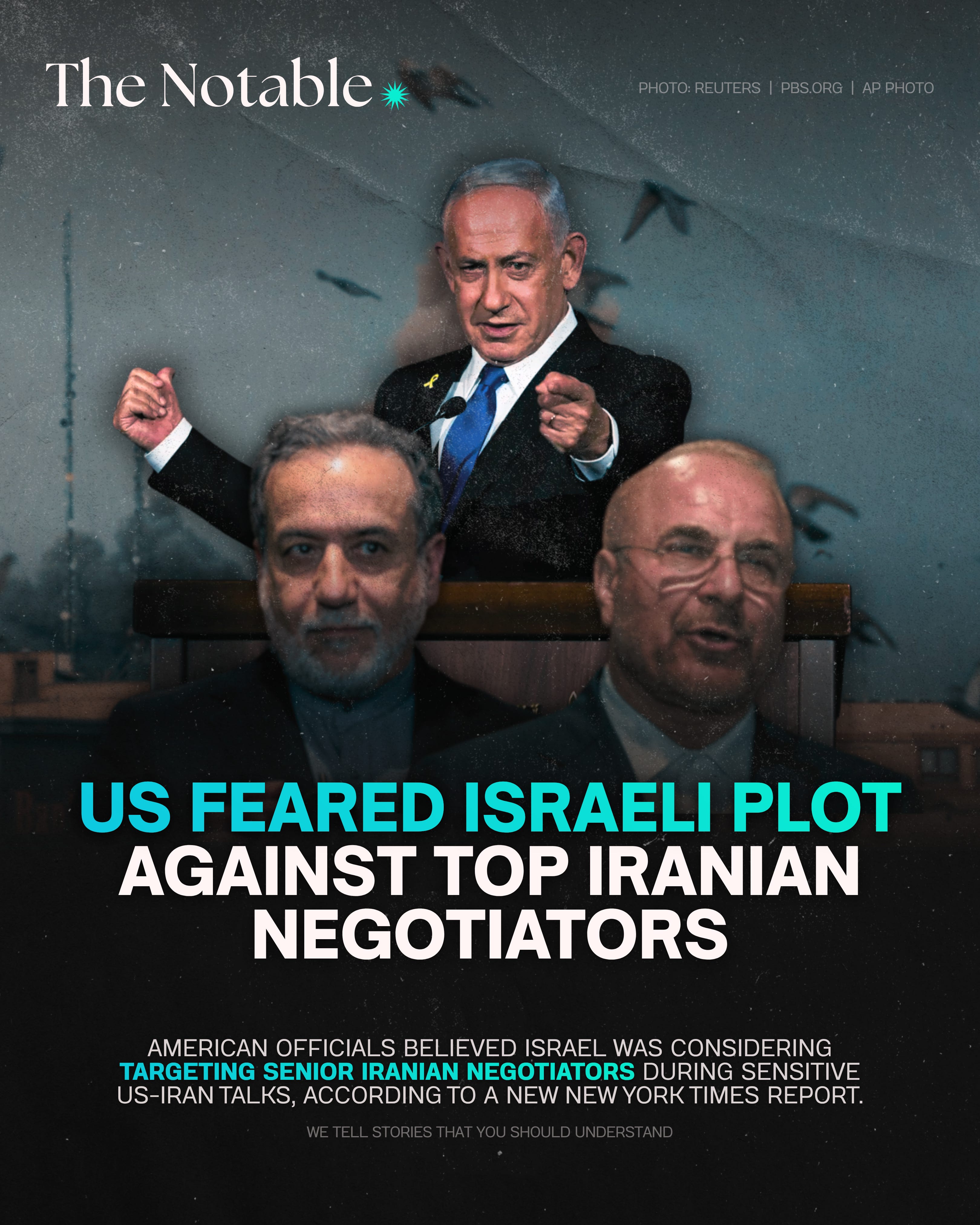
A new report from The New York Times has revealed an extraordinary behind-the-scenes episode during recent US-Iran negotiations: American officials reportedly feared Israel could attempt to assassinate senior Iranian negotiators while diplomacy was underway.
According to current and former US officials cited by the newspaper, the Trump administration became increasingly concerned that Israel might target Iranian Foreign Minister Abbas Araghchi and senior political figure Mohammad Bagher Ghalibaf during sensitive negotiations involving ceasefire efforts, regional security, and maritime stability.
The report says Washington quietly used regional intermediaries to warn Iran about possible threats, fearing that any attack on active negotiators could collapse diplomacy and trigger a much wider Middle East crisis.
If accurate, the episode reveals how fragile and internally divided the regional situation may have become behind closed doors.
The Core Concern Inside Washington
The significance of the report is not simply the alleged assassination fears themselves.
It is what those fears suggest about the broader strategic divide between Washington and Israel during one of the region’s most volatile periods in years.
According to the NYT, US officials believed Israeli planners may have viewed Araghchi and Ghalibaf as legitimate wartime targets because of their senior positions inside Iran’s political and security establishment.
But for Washington, the stakes were different.
At the time, the Trump administration was reportedly attempting to:
stabilize regional tensions,
prevent wider escalation,
protect maritime trade routes,
and maintain diplomatic channels with Tehran.
US officials reportedly feared that killing senior Iranian negotiators during talks could:
destroy negotiations instantly,
strengthen hardline factions inside Iran,
provoke retaliation across the region,
and potentially ignite a broader Gulf conflict involving the Strait of Hormuz.
That strategic logic appears to have driven the decision to quietly warn Iran through intermediaries.
Why Abbas Araghchi Matters
Abbas Araghchi has become one of the most important figures in Iran’s diplomatic apparatus.
As Iran’s foreign minister and a key negotiator with Washington, he has reportedly played a central role in discussions involving:
ceasefire arrangements,
sanctions,
maritime security,
and broader US-Iran communication channels.
Targeting someone actively involved in negotiations would carry unusually serious diplomatic consequences.
Historically, even hostile states often preserve negotiation channels during periods of conflict because they provide critical off-ramps that can prevent wars from expanding uncontrollably.
That is one reason the allegations are attracting such intense international attention.
The Inclusion Of Ghalibaf Is Also Significant
The inclusion of Mohammad Bagher Ghalibaf in the report is equally important.
Unlike Araghchi, who is primarily associated with diplomacy, Ghalibaf represents institutional political power within Iran’s system. He has long been viewed as a major establishment figure with deep ties to Iran’s security structure.
His reported presence in negotiations suggested Tehran may have been treating the talks as strategically important rather than merely symbolic.
According to some accounts referenced in international reporting, Iranian security officials even warned at one point that Israeli aircraft may have entered Iranian airspace while Ghalibaf was returning from Pakistan. Some reports claim his route was altered during the journey.
Those operational details remain publicly unverified.
A Window Into US-Israel Tensions
The report also sheds light on a deeper issue that has quietly shaped Middle East geopolitics for years: differing US and Israeli approaches toward Iran.
While Washington may pursue diplomacy, deterrence, and controlled de-escalation, Israel has consistently viewed Iran’s military capabilities, regional proxy networks, and nuclear ambitions as existential threats.
From Israel’s perspective, senior Iranian political and security figures are often viewed through a military and strategic lens rather than a purely diplomatic one.
That difference in strategic priorities has periodically created tensions between the two allies, especially during negotiations with Tehran.
The latest report suggests those tensions may have become particularly acute during recent talks.
The Bigger Strategic Question
Beyond the immediate allegations, the story raises a larger geopolitical question:
How much control does Washington actually have over escalation dynamics involving its closest regional allies?
If US officials genuinely feared that Israeli operations could derail ongoing American diplomacy, it suggests concerns inside Washington about maintaining strategic control during fast-moving regional crises.
That issue matters far beyond this single episode.
The Middle East remains tightly interconnected:
tensions involving Iran affect global energy markets,
maritime trade routes through the Strait of Hormuz remain strategically vital,
and any large-scale escalation could rapidly pull in multiple regional actors.
For the US, preventing uncontrolled escalation has become a central strategic objective.
What Remains Unconfirmed
The allegations remain based largely on unnamed current and former US officials, intelligence assessments, and behind-the-scenes diplomatic accounts.
Neither the US nor Israel has publicly confirmed the claims, and no evidence has been released publicly supporting the alleged targeting concerns.
That distinction matters.
At this stage, the report should be understood as an account of what US officials reportedly believed and feared during negotiations, rather than as independently verified proof that assassination plans were finalized or approved.
Still, the revelations offer a rare glimpse into the level of distrust, risk calculation, and geopolitical tension operating behind the scenes during one of the world’s most dangerous diplomatic standoffs.