


Read full story here. (March 17, 2026)
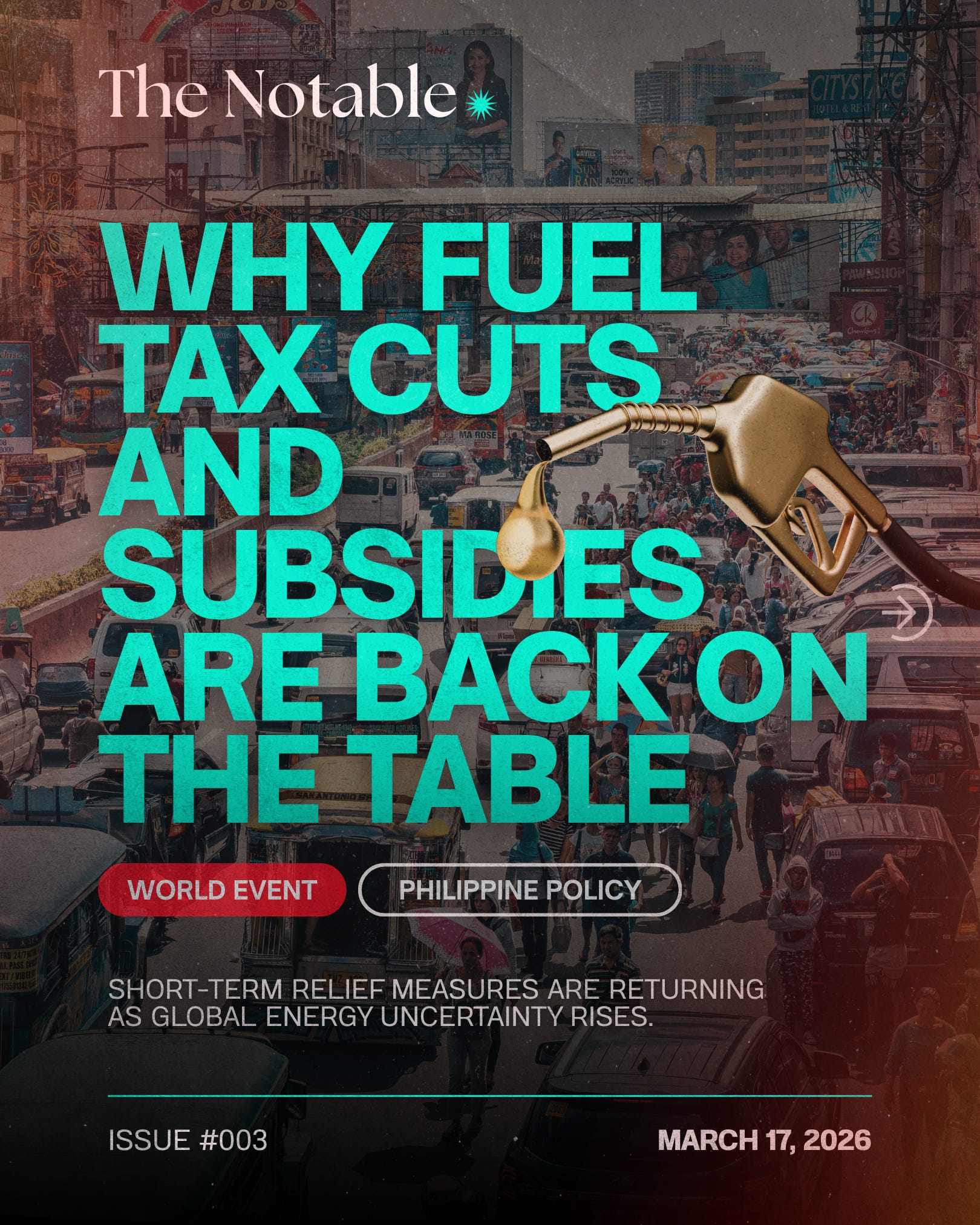
A war far from Philippine shores is quietly shaping the price Filipinos pay at the fuel pump.
Escalating tensions in major oil-producing regions have disrupted global supply routes and pushed crude prices higher. Because the Philippines imports roughly 90% of its fuel needs, these global shocks quickly translate into rising transport costs, higher electricity prices, and broader inflation risks.
In response, the government has begun rolling out short-term measures including fuel subsidies for vulnerable sectors, conservation policies across agencies, and proposed temporary suspensions of fuel excise taxes. These moves aim to cushion households and businesses from sudden price spikes.
But the crisis is also forcing deeper strategic questions. Policymakers are now weighing supply diversification, energy transition timelines, and the country’s long-term exposure to global volatility. In an interconnected world, geopolitical conflict can influence national economic stability almost instantly.
For Filipinos, the issue goes beyond fuel prices. It highlights how global events can shape domestic policy choices and everyday living costs.
As uncertainty continues, the challenge will be building an energy strategy that balances affordability, security, and sustainability.
Should the Philippines accelerate its shift to renewable energy to reduce vulnerability to global conflicts or focus first on securing cheaper fuel supplies?