


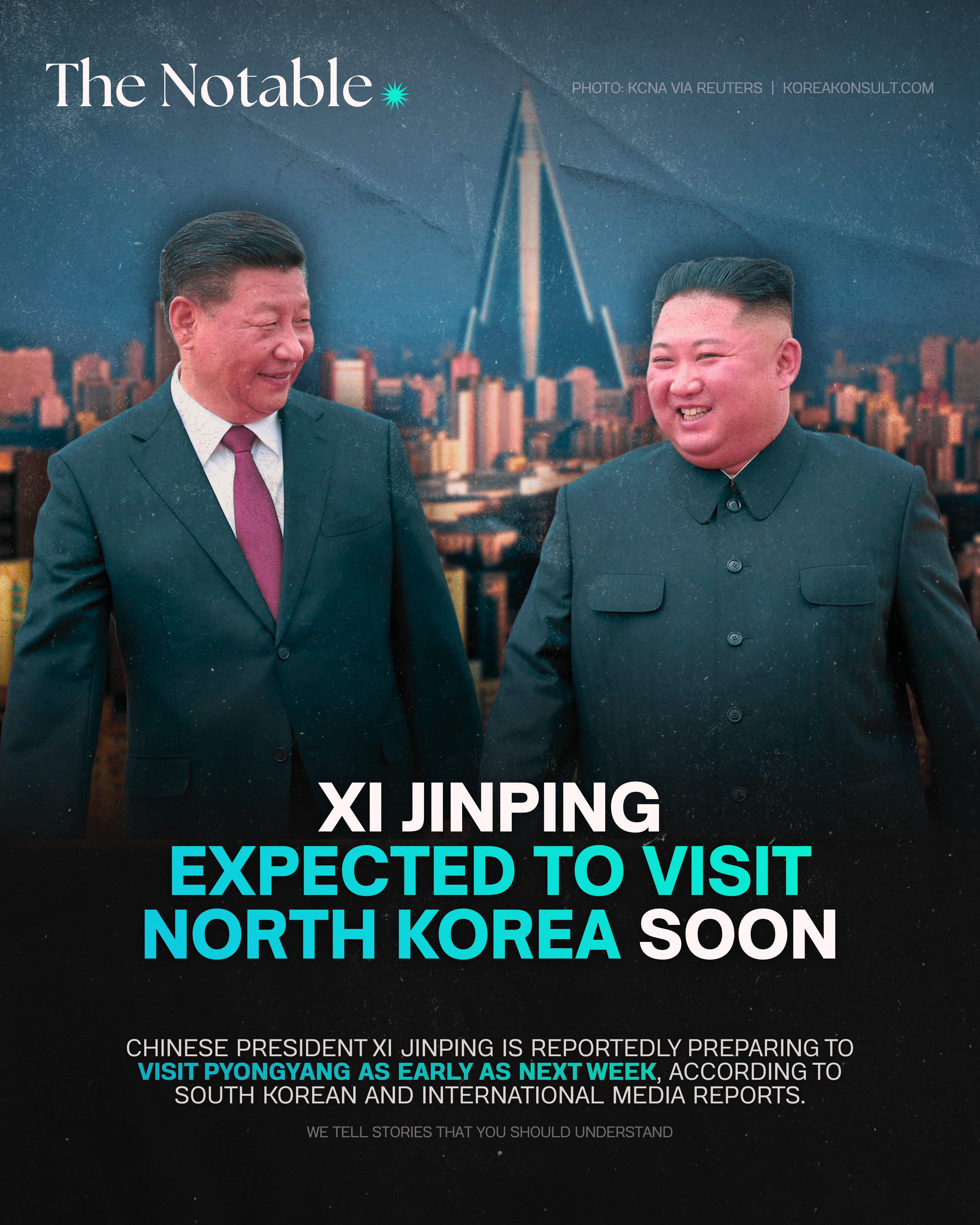
For the first time in years, Chinese President Xi Jinping is reportedly preparing to visit North Korea for high-level talks with leader Kim Jong Un.
According to reports from South Korea’s Yonhap News Agency and Reuters, Xi could travel to Pyongyang as early as next week, with Chinese security and protocol teams already reportedly seen in the North Korean capital preparing for the visit.
Neither Beijing nor Pyongyang has officially confirmed the trip. But if it proceeds, it would become Xi’s first visit to North Korea since 2019 and one of the most important geopolitical developments in East Asia this year.
The timing is not accidental.
The expected visit comes immediately after Xi’s summit with Donald Trump in Beijing and amid rapidly shifting global alliances involving China, Russia, North Korea, and the United States.
It also comes at a moment when the global balance of power is becoming increasingly fragmented.
Why This Visit Matters
China has always been North Korea’s most important economic and political backer.
Even during periods of tension between Beijing and Pyongyang, China remained the country’s primary trade lifeline, diplomatic shield, and strategic buffer against U.S. influence in Northeast Asia.
But over the past several years, the relationship has evolved into something broader than traditional alliance politics.
What is emerging now is a more coordinated geopolitical alignment between China, Russia, and North Korea as tensions with Washington continue to deepen.
Since the war in Ukraine, relations between Vladimir Putin and Kim Jong Un have strengthened dramatically. Military cooperation between Moscow and Pyongyang has reportedly expanded, while China has simultaneously intensified strategic coordination with Russia across economic, diplomatic, and security issues.
This creates a new strategic reality in Asia.
China increasingly sees regional stability and bloc coordination as essential to countering U.S. pressure, particularly as Washington strengthens military partnerships with Japan, South Korea, and the Philippines.
In that environment, North Korea becomes more important to Beijing, not less.
The Return Of High-Level China-North Korea Diplomacy
Xi Jinping last visited Pyongyang in 2019.
That trip itself was historic because it marked the first visit by a Chinese leader to North Korea in 14 years. At the time, the visit came during an entirely different geopolitical environment, one dominated by Trump-Kim diplomacy and hopes for possible denuclearization talks.
Today, the atmosphere is completely different.
Relations between North Korea and the United States have effectively collapsed. Tensions across the Taiwan Strait have intensified. Military activity around the Korean Peninsula has increased. And the global system itself is becoming more polarized between competing power centers.
Against that backdrop, a Xi-Kim summit now carries far greater strategic weight.
Analysts believe several major topics are likely to dominate discussions:
Regional security coordination
Economic support and trade
Military cooperation
Sanctions pressure
The future direction of Korean Peninsula diplomacy
Managing North Korea’s growing ties with Russia
The final point may be particularly important.
While China and Russia remain aligned strategically, Beijing still wants to maintain primary influence over Pyongyang. A deeper Russia-North Korea relationship potentially reduces China’s leverage over one of its most strategically important neighbors.
A visit by Xi could therefore serve both symbolic and practical purposes: reinforcing political solidarity while ensuring China remains central to North Korea’s future direction.
Trump’s Shadow Still Looms Over The Region
Another major reason this story matters is timing.
Xi’s expected trip comes only days after Donald Trump’s visit to Beijing, where the two leaders discussed trade, Taiwan, and global conflicts.
Trump has repeatedly signaled openness to restarting diplomacy with Kim Jong Un, reviving speculation that another phase of U.S.-North Korea negotiations could eventually emerge.
If that happens, China will want a seat at the center of the process.
Historically, Beijing has viewed Korean Peninsula diplomacy as a core national security issue. Any future negotiations involving Washington and Pyongyang would directly affect China’s strategic environment.
That means Xi’s potential visit may not simply be about strengthening ties with Kim Jong Un.
It may also be about shaping the geopolitical conditions before the next phase of regional diplomacy begins.
A Region Moving Into A More Competitive Era
What makes this moment significant is not just the possibility of a state visit itself.
It is what the visit represents.
Across Asia, the region is increasingly dividing into competing strategic camps:
The U.S., Japan, South Korea, and regional allies expanding defense coordination
China, Russia, and North Korea moving closer politically and strategically
This does not necessarily mean a formal alliance structure is emerging.
But it does signal a more competitive geopolitical environment where power blocs, deterrence, military positioning, and influence networks matter more than they did just a few years ago.
A Xi Jinping visit to North Korea would therefore send a message far beyond Pyongyang.
It would signal that Beijing intends to remain deeply involved in shaping the future security architecture of East Asia as global tensions continue to rise.