


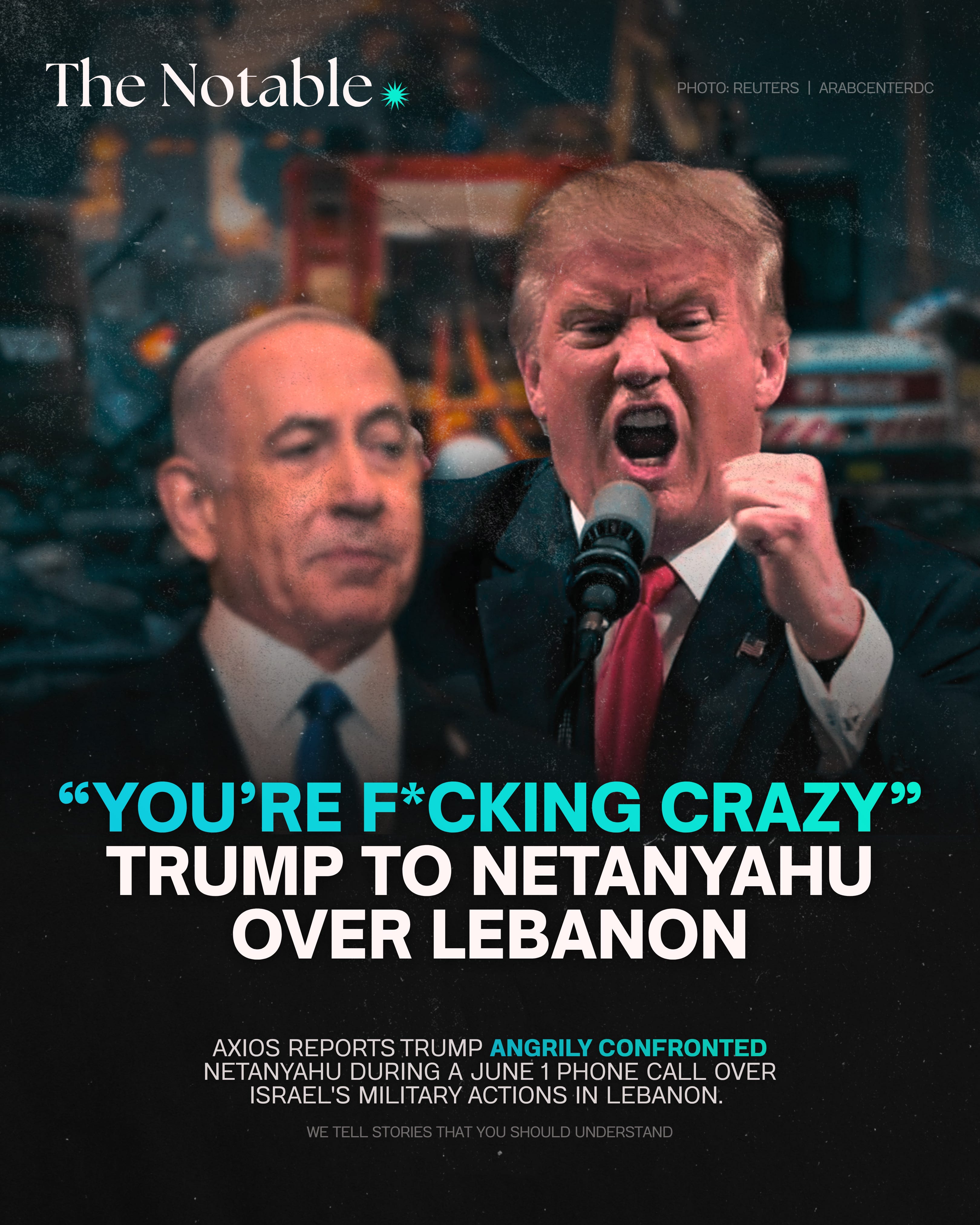
A reported confrontation between U.S. President Donald Trump and Israeli Prime Minister Benjamin Netanyahu is drawing global attention, offering a rare glimpse into tensions behind one of the world’s most important alliances.
According to a new Axios report, Trump became furious during a June 1 phone call with Netanyahu over Israel’s military actions in Lebanon, warning that further escalation could undermine broader U.S. strategic goals in the Middle East.
While the reported language has not been independently verified, the story points to something potentially more significant than the heated exchange itself: growing friction between Washington’s diplomatic priorities and Israel’s military strategy.
What Happened?
Axios, citing multiple officials familiar with the conversation, reports that Trump angrily confronted Netanyahu after Israel signaled it could expand military operations in Lebanon, including potential strikes in Beirut.
According to the report, Trump believed Israel’s actions were becoming increasingly difficult to justify and risked creating wider regional consequences.
The reported exchange included unusually blunt language, with sources claiming Trump accused Netanyahu of acting recklessly and warned that Israel was becoming increasingly isolated internationally.
Neither the White House nor Netanyahu’s office has publicly confirmed the reported remarks, and no official transcript of the call has been released.
Why Lebanon Matters
The immediate issue was not Gaza.
Instead, the dispute reportedly centered on Lebanon, where tensions between Israel and Hezbollah have remained high despite efforts to maintain a fragile ceasefire.
For months, the Trump administration has attempted to prevent the Israel-Hezbollah conflict from escalating into a larger regional war. Washington has simultaneously pursued diplomatic engagement with Iran, creating additional incentives to avoid a major military crisis on Israel’s northern border.
From the administration’s perspective, a significant Israeli escalation in Lebanon could jeopardize both objectives.
The Iran Factor
One of the most important elements of the story is the role of Iran.
According to Axios, U.S. officials were concerned that expanded Israeli military operations could complicate ongoing negotiations between Washington and Tehran.
The Middle East is increasingly interconnected. Actions taken in Lebanon do not remain confined to Lebanon. They influence calculations in Tehran, Washington, Beirut, and across the wider region.
As a result, Israeli military decisions have become deeply intertwined with broader American diplomatic efforts.
This appears to have been a major source of Trump’s frustration.
A Rare Public Crack
The United States and Israel remain close allies, but that does not mean their interests always align.
Israel’s government is primarily focused on eliminating security threats and maintaining deterrence against Hezbollah and other adversaries.
The United States, meanwhile, must balance support for Israel with a broader set of regional priorities, including preventing wider conflict, protecting diplomatic initiatives, and managing relationships with multiple actors across the Middle East.
Those competing priorities can create tension, particularly during moments of crisis.
Axios describes the call as one of the most contentious exchanges between Trump and Netanyahu since Trump’s return to office.
Did the Call Change Anything?
According to the report, Israel ultimately backed away from planned strikes on Beirut following the conversation.
If accurate, that would suggest the White House still possesses considerable influence over Israeli decision-making during periods of escalation.
At the same time, Netanyahu later reiterated that Israel reserves the right to strike Hezbollah targets if it believes its security requires it.
In other words, the underlying disagreement has not disappeared.
The Bigger Picture
The most important story may not be the profanity.
It may be what the confrontation reveals about the evolving relationship between Washington and Jerusalem.
For decades, U.S. support for Israel has been a cornerstone of American Middle East policy. Yet support does not eliminate disagreements, particularly when military actions threaten broader U.S. strategic objectives.
The reported call suggests a growing willingness by Washington to directly pressure Israel when American diplomatic priorities are at risk.
Whether this proves to be an isolated disagreement or the beginning of a deeper shift in the relationship remains unclear.
What is clear is that the conflict in Lebanon is no longer just a local security issue. It has become part of a much larger contest involving Israel, Hezbollah, Iran, and the United States, with consequences that extend far beyond the region’s borders.
As tensions continue to rise, the world will be watching to see whether diplomacy can contain the crisis or whether the region moves one step closer to a broader confrontation.